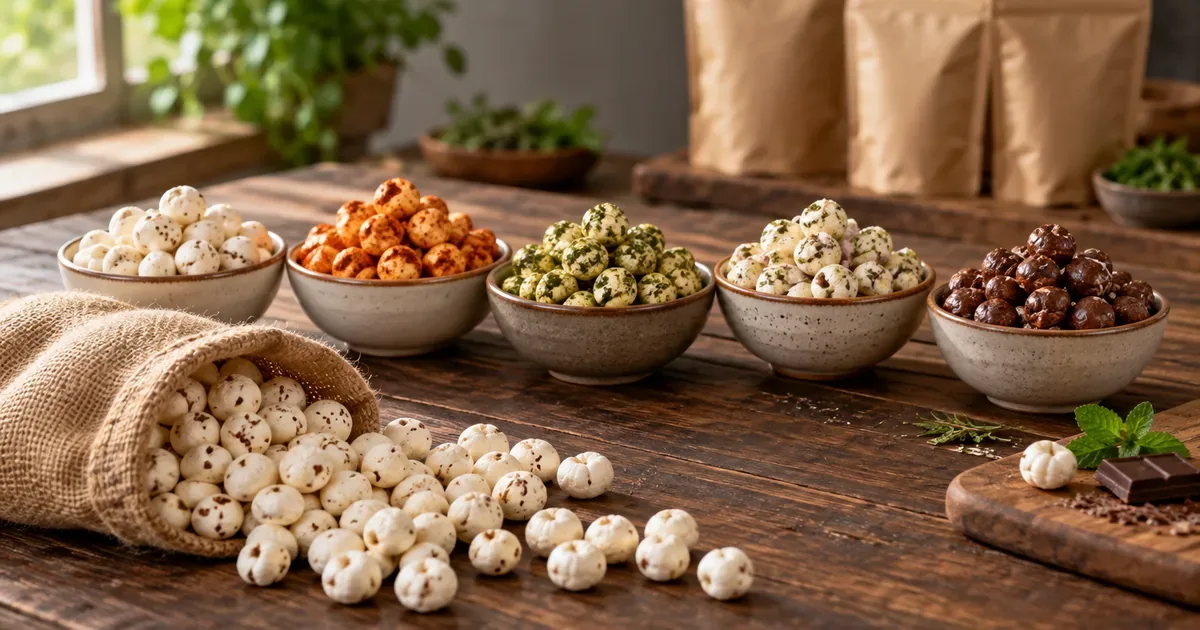

Evening chai is ready, four people are around the table, and the packet of namkeen you opened last week has gone soft. That is the moment a dry snack and a lemon save the day. A makhana bhel recipe needs no cooking, no oil in a pan and no running to the shop. You take two or three dry snacks that already have flavour, add onion, tomato, coriander and a squeeze of lemon, and toss.
The same logic covers Khakhra chaat, a travel snack box and a bowl for a match night. This guide covers five mixes you can build in ten minutes, the amounts that keep a bowl crisp instead of soggy, which flavour of makhana and khakhra to reach for, and how to pack the same mixes for tiffin and trains.
Why Dry Snacks Make the Best Bhel
Bhel falls flat when the base is already damp. Puffed fox nuts, khakhra and oven-baked gathiya are dry and light, so they hold their shape for a few minutes under lemon and onion, which is all the time a bowl needs. Fried mixtures and puffed rice turn pasty far sooner, especially in a closed tiffin box.
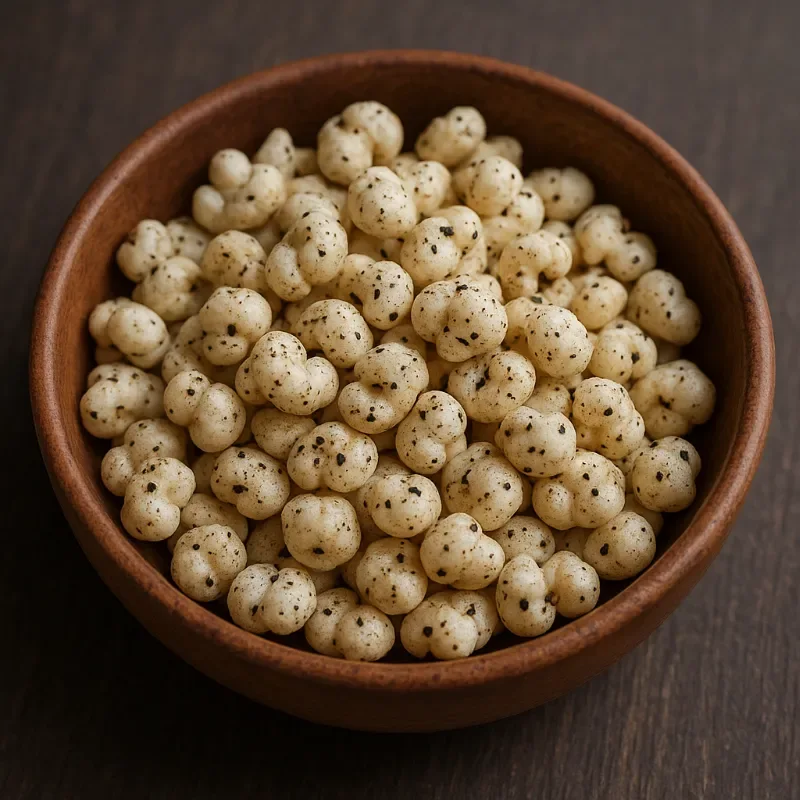
Roasted makhana carries about 3-4 g of protein in a 28 g handful, according to USDA figures for plain fox nuts, and it is light on the hand and the pocket. A broken khakhra does the job of sev. A pinch of gathiya gives the salt crunch that a bowl of plain makhana lacks. Read more on why Baked beats fried snacks when you build a chaat base.
The Base, the Crunch, the Wet, the Finish
Every mix in this guide follows the same four layers. Learn the layers once and you can build a bowl out of whatever the pantry holds.
- Dry base. One handful of roasted makhana or two broken khakhra, which is 30-40 g per bowl and gives the bulk of the volume.
- Crunch layer. A tablespoon of gathiya, sev or crushed Garlic Cheese Khakhra for a salt edge that the base alone cannot carry.
- Wet layer. Chopped onion, tomato, boiled potato or sprouts, plus lemon juice, which is the only reason a bhel tastes like chaat rather than a packet of namkeen.
- Finish. Chaat masala, roasted cumin powder, chopped coriander and green chilli, added last so the aroma stays sharp.
Keep the wet layer to about half the dry layer by volume. That one habit is the difference between a bowl that stays crisp on the table and one that weeps within five minutes.
Toss a bhel twice: once to season it, once again just before the bowl reaches the table.
Five Mixes for Five Different Moments
The base changes with the moment. A tiffin mix needs no tomato at all, while a guest bowl can carry potato and chutney because it is eaten straight away.
| Mix | Dry Base | Wet Layer | Best For |
|---|---|---|---|
| Classic makhana bhel | 30-40 g roasted makhana | Onion, tomato, lemon | Chai time at home |
| Khakhra chaat | 2-3 khakhra, broken | Boiled potato, onion, chutney | Guests and festivals |
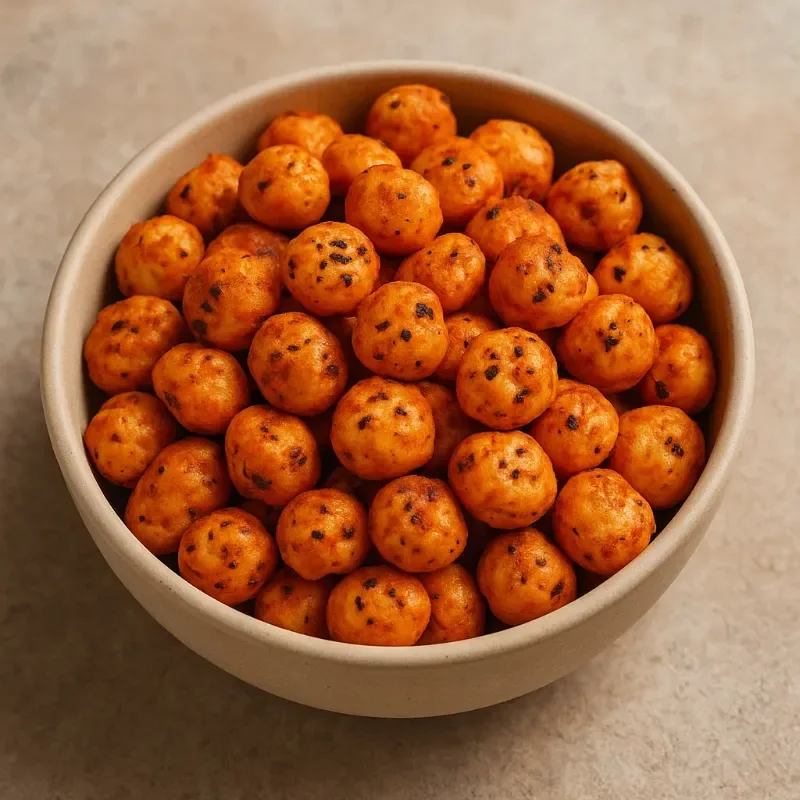
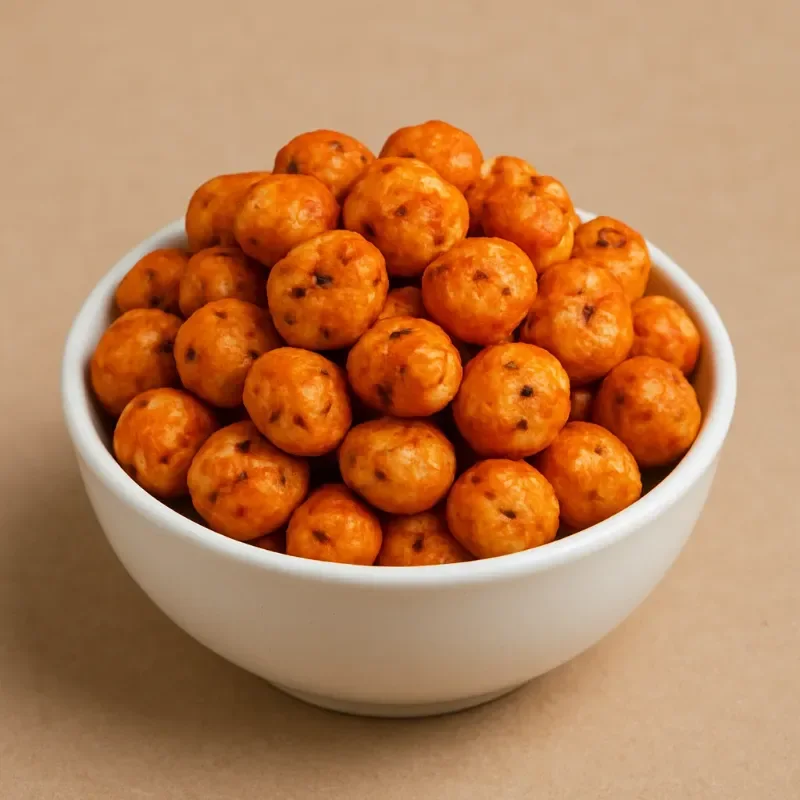
| Cheese and pepper bowl | 30 g Peri-Peri Makhana | Sweet corn, capsicum | Movie and match nights |
| Travel dry mix | 30 g makhana plus 25 g Methi Khakhra | None, lemon wedge only | Trains and road trips |
| Light sprouts bhel | 30 g Himalayan Salt Makhana | Moong sprouts, cucumber | Tiffin and lunch boxes |
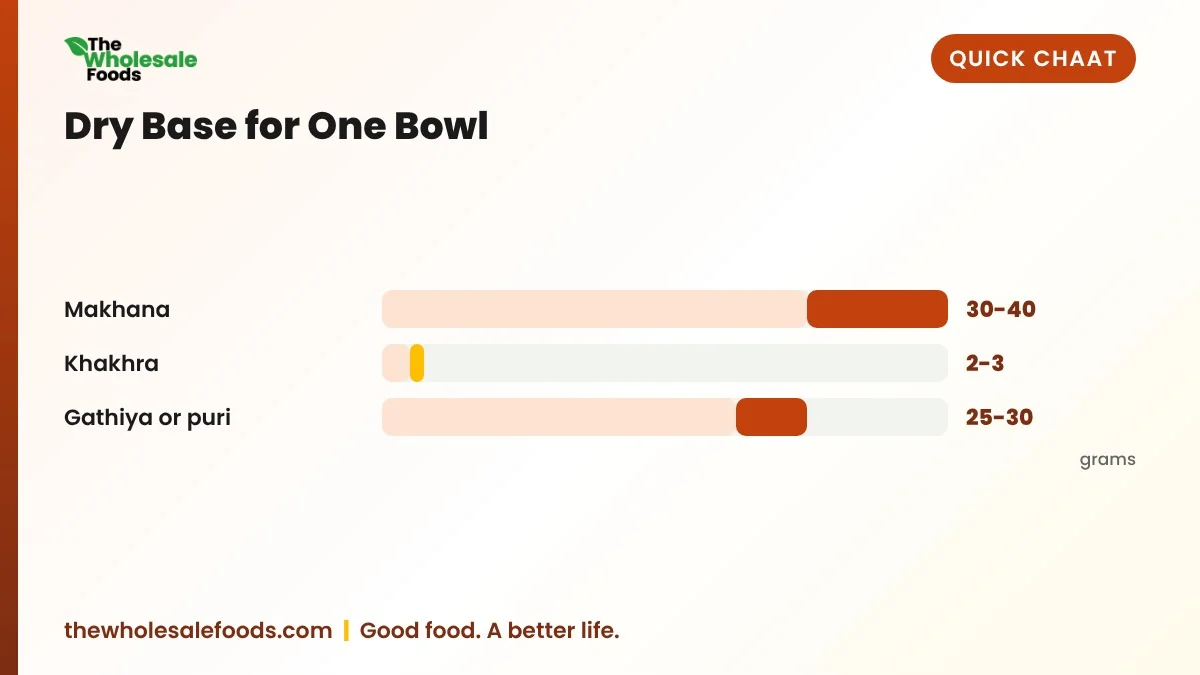
The classic bowl is the one most people mean by a makhana bhel recipe: plain or salt makhana, onion, tomato, lemon, chaat masala. For guests, break khakhra into a wide plate instead of a bowl so the pieces stay visible and nobody digs for the last crumb. For a match night, Jalapeno Makhana and sweet corn hold up under a bowl of popcorn without going quiet.
How to Build a Bowl in Six Steps
- Measure the base. Put 30-40 g of makhana, roughly one handful, into a wide bowl rather than a deep one, since a wide bowl lets you toss without crushing.
- Break the khakhra last. Snap Masala Khakhra or plain khakhra into the bowl with your hands right before adding anything wet, so the edges stay sharp.
- Cut the wet layer small. Dice onion, tomato and potato into pieces no bigger than a makhana, so every bite carries both crunch and juice.
- Season dry first. Sprinkle chaat masala, roasted cumin and salt, then toss. Salt drawn out by lemon comes later and cannot be taken back.
- Add acid at the end. Squeeze lemon over and toss once. If the bowl will wait ten minutes or more, keep the lemon in a small cup and add it at the table.
- Finish with herbs. Coriander, green chilli and a pinch of red chilli powder go on top, not folded in, so the colour and smell reach the table intact.
For a Jain table, Peri-Peri Jain Makhana skips onion, garlic and root vegetables. Serve it with cucumber, tomato and coriander only, and the crunch stays exactly the same.
Flavour Pairings That Actually Work
Flavoured makhana is already seasoned, so the mix around it should be mild. The commonest mistake is pairing a strong makhana with a strong khakhra and getting a bowl that shouts on every note.
| Makhana Flavour | Khakhra Partner | Add Only |
|---|---|---|
| Black Pepper and Salt Makhana | Plain or Amul Ghee Sada Khakhra | Onion, lemon, coriander |
| Tangy Tomato Makhana | Jeera Khakhra | Cucumber, no extra salt |
| Pudina Makhana | Chatpata Khakhra | Mint, lemon, chilled water for chaas |
| Peri-Peri Makhana | Cheese Masala Khakhra | Corn, capsicum, no chaat masala |
| Chocolate Makhana | None | Keep it in a separate bowl |
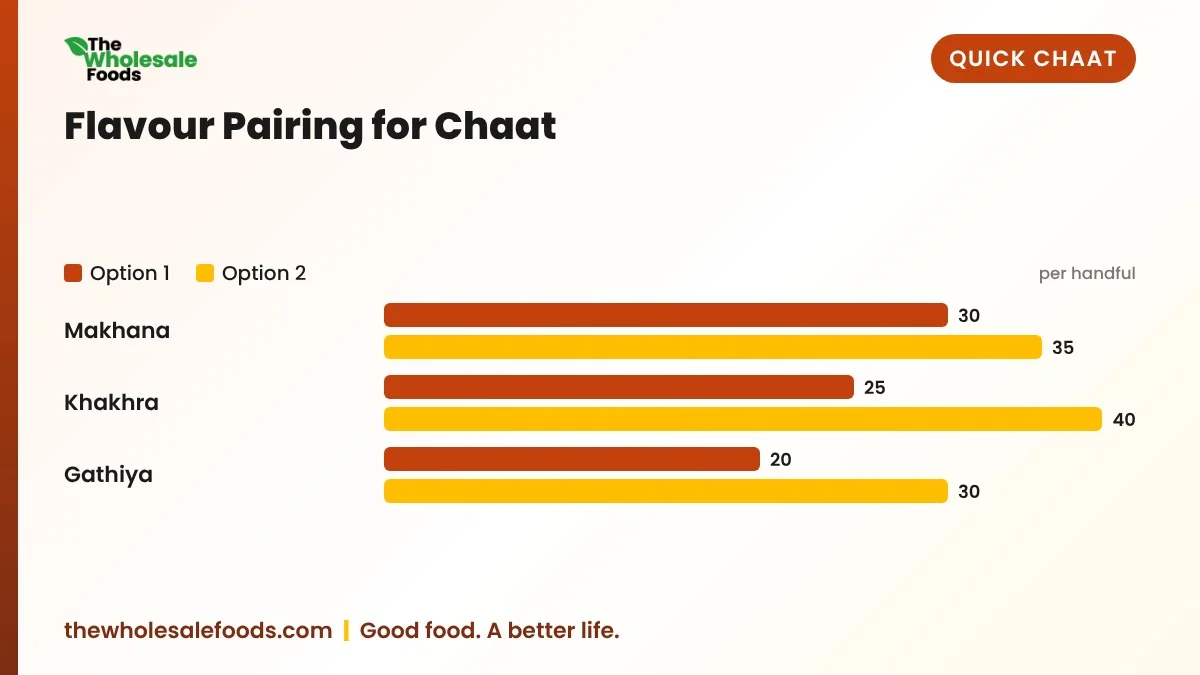
One rule keeps this honest: pick one loud element per bowl. If the makhana carries chilli, let the khakhra be plain or ghee-roasted. If you want a sweet note, put Chocolate Makhana in its own dish, because chocolate in a onion-and-lemon bhel ruins both. For a fuller picture of the flavours available, see the Types of makhana guide.
Enjoying this read? Get more like it.
Get fresh snack inspiration and updates from our team.
Portion Sizes for a Bowl, a Tiffin and a Table
A handful is the working unit, and it keeps a bowl from turning into a meal. For a 40-person office or a small party, the same handful maths scales cleanly.
| Setting | Per Person | For 20 People | Note |
|---|---|---|---|
| Chai-time bowl | 30-40 g | 600-800 g | Serve at once |
| Tiffin box | 25-30 g | N/a | No wet layer |
| Party platter | 40-50 g | 800-1000 g | Add potato and chutney |
| Match night | 40-50 g | 800-1000 g | Refill once, not twice |
Twenty guests with a platter and a pot of chai need roughly a kilogram of dry mix, split between makhana and khakhra. Wholesale packs of ten pouches of 100 g each fit that kind of maths neatly, which is why they suit offices and kirana counters as much as big families. See the Office pantry bulk guide for stocking the same numbers across a month.
Packing Bhel Without Losing the Crunch
The wet layer is the only enemy of a packed bhel. Split the mix into two containers and let the crunch live apart from everything else.
- Dry container. Makhana, broken khakhra and gathiya together, with the masala already mixed in.
- Wet container. Onion, tomato, cucumber or sprouts, kept covered and cold until the last moment.
- Lemon in a small cup. A wedge or a spoonful of juice travels better than a squeezed bowl.
- Assemble at the table. Pour the wet into the dry, toss twice, and eat within ten minutes.
For a train journey, skip the wet layer entirely and carry a lemon wedge plus a small box of Chatpata Khakhra. The mix stays crisp for the whole trip and still tastes of chaat.
Storage and Freshness
Once a pouch of makhana or khakhra is opened, moisture is what finishes it. Keep the mix dry and cool and the crunch survives to the printed date.
- Airtight jars. Transfer an opened pouch into a steel or glass jar with a sealing lid, not the clipped-open packet.
- Cool and dry. Store away from the stove, the window and the fridge, since steam and cold both soften khakhra.
- No spoon from a wet hand. Use a dry spoon for every serving, and never over an open bowl.
- Finish within 2-3 weeks. Opened roasted makhana and khakhra taste best inside that window; check the best-before date on the pack.
- Revive a soft batch. A dry tawa on low heat for two to three minutes, then cooling on a plate, brings back most of the crunch. Do not use the microwave, which dries makhana unevenly.
What to Check Before Buying in Bulk
Bulk snack buying goes wrong on paperwork and shelf life, not on taste. Check these before committing to a large quantity for an office, an event or a shop.
- Shelf life left on the pack. Ask for the printed best-before and the packing date, and make sure the stock you receive leaves you months of selling or serving time.
- Ingredient and allergen label. Flavoured makhana and khakhra differ by milk, nuts and gluten traces, so read the label rather than the flavour name.
- Pack size against your portion. Ten pouches of 100 g suit a pantry or counter better than one loose sack, because you open only what you serve.
- Storage space. A dry, shaded shelf with room for pallets or cartons matters more than the order size.
- Samples first. Taste two or three flavours before a full order, and check that the crunch survives a week in your own jars.
- Seller licence. Confirm the supplier holds a valid FSSAI licence and can put it in writing on the invoice.
Prices, minimum quantities and delivery days vary by enquiry, so settle those on Quick Order rather than assuming a number.
Conclusion
A good bowl comes down to a dry base, one loud flavour, a small wet layer and lemon at the end. Keep those four in place and a makhana bhel recipe works for chai at home, a tiffin box, a train berth or twenty guests, with nothing cooked and nothing fried. Mix it up with the Makhana range, the Khakhra range and the oven-baked Snacks list, or send a bulk enquiry on Quick Order for an office pantry or a festive counter.
Disclaimer: This article is general food and nutrition information, not medical advice. People with health conditions or allergies should follow their doctor's advice.