

It is 4:30 pm on the third floor. The chai is done, the last samosa is gone and someone is walking to the corner shop for the third time this week. Every office pantry reaches this point: the stock runs out, the good packets go first, and whatever is left is the biscuits nobody wanted. If you manage that cupboard, this guide to healthy snacks office pantry stocking is for you. Below you will find the four snack jobs a pantry has to fill, a shelf plan, a monthly refill checklist, portioning and storage rules, and how to order in bulk without ending up with stale stock.
Why Most Office Pantries Fail Within a Month
A pantry is not a small shop; it is a shared resource with no gatekeeper. Three things quietly kill it.
Everyone eats from the same big bag
A 1 kg pack opened on Monday is still open on Friday, sitting on a counter under a fan. Humidity gets in, crunch goes out, and the item that cost the most per kilo is thrown away half finished. Single-serve packs fix this in one step.
Nobody counts what actually disappears
Purchase decisions get made by memory. The makhana goes in two days and the sweet cookies sit for six weeks, but the order repeats the same way every month. A simple tally on a clipboard solves more than any new product will.
The shelf has items, not roles
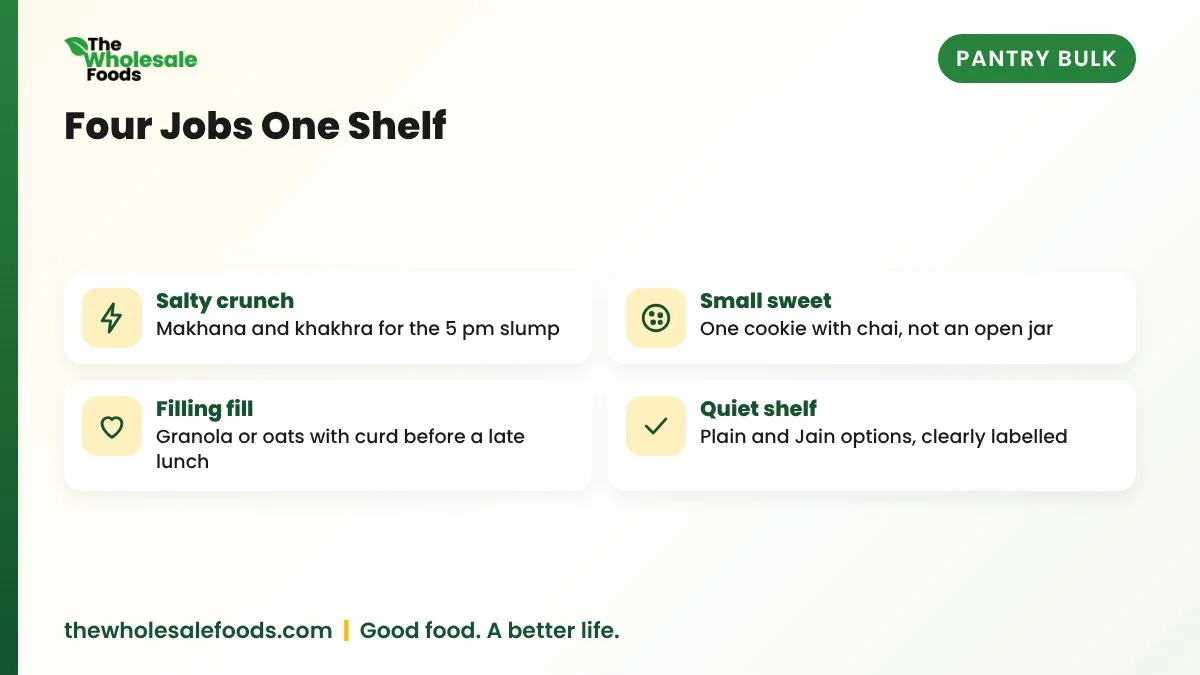
Twenty packets of one thing is less useful than four categories that cover the day: a salty crunch for the 5 pm slump, a small sweet for chai with guests, something filling for the skipped lunch, and something for the person who cannot eat fried food.
The Four Snack Jobs a Pantry Must Fill
Think in roles rather than brands. Four roles, each with two or three options, covers almost every person in a 50-desk office.
Role one: light salty crunch
This is the highest-rotation item. Peri-Peri Makhana and Tangy Tomato Makhana do the job without oil-soaked trays, and makhana comes from a lotus pond rather than a frying pan, so it suits people avoiding fried snacks. For a Gujarati palate, Masala Khakhra and Methi Khakhra are crisp, dry and travel well in a laptop bag. If you want a deeper reference on the fox nut shelf, this makhana flavour guide lists what each variant tastes like.
Role two: the small sweet with chai
Guests arrive, or it is Friday. Keep a small sweet shelf: Coconut Cookies, Jeera Cookies and Oats Jaggery Cookies cover coconut, savoury and jaggery tastes. Jaggery is still sugar, so keep these at one packet per person, not an open jar.
Role three: something filling
The 11 am meeting that pushes lunch to 3 pm needs real food. A jar of Rolled Oats with hot milk and a banana, or Original Granola with curd, holds people until lunch. For a vegetarian protein shelf, this list of high-protein vegetarian snacks works well as a pantry shopping list.
Role four: the quiet shelf
Somewhere between 40 and 100 people, at least a few will not eat fried, sugary or onion-garlic food. Give them a labelled shelf: Plain Makhana, Plain Khakhra, Plain Almonds and Peri-Peri Jain Makhana for Jain colleagues. During Navratri and Pagan fasting days this shelf becomes the busiest one in the building.
Shelf Plan: What to Stock and How Much
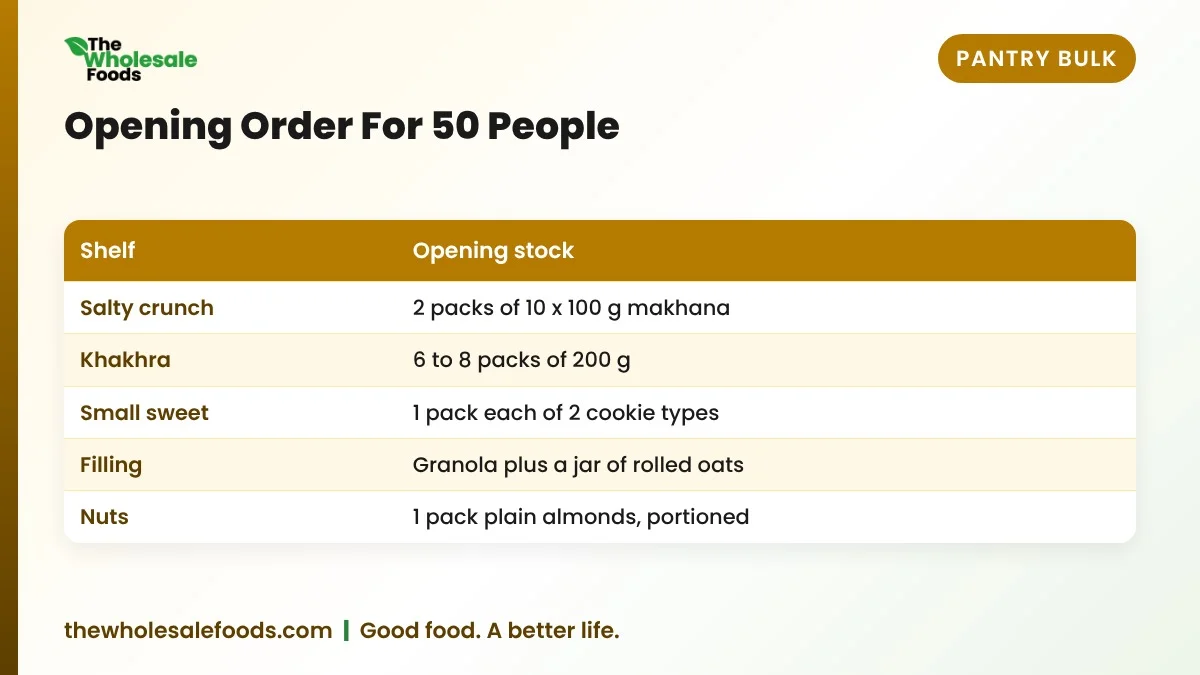
Start with a two-week buffer, then adjust. The table below is a workable opening order for a 50-person office with one pantry, expressed in the wholesale packs most of these items come in.
| Shelf | Opening stock | Rotation |
|---|---|---|
| Salty crunch | 2 packs of 10 x 100 g makhana | Fastest, check weekly |
| Khakhra | 6 to 8 packs of 200 g | Fast, two flavours |
| Small sweet | 1 pack each of 2 to 3 cookie types | Medium |
| Filling | Granola plus a jar of oats | Medium |
| Nuts | 1 pack of plain almonds | Slow, portion strictly |
| Quiet shelf | Plain makhana and plain khakhra | Medium, festive spikes |
Two cautions. Nuts and granola are energy-dense, so keep them to a handful or a 100 g pouch per person rather than an open bowl. And if your pantry serves young children at a creche or a family day, whole nuts and makhana are a choking risk under five; keep them out of reach.
Portioning, Labelling and Storage Rules That Save Money
Most pantry waste is a handling problem, not a buying problem. Four rules fix it.
Decant into airtight bins, keep the pack
Empty an opened pouch into a labelled bin with a scoop, and staple the pack's batch and best-before date to the shelf tag. Never pour a new batch on top of the leftovers in the same bin.
First in, first out
New stock goes behind old stock. In a warm Vadodara or Ahmedabad summer, keep cartons off the floor on a rack, away from the pantry window and the fridge vent; heat and light are what turn khakhra soft and nuts oily.
One serving, one packet
For a shared fridge or a tea counter, put out one pouch per person per day rather than an open kilo. It is the single easiest control on calories and on stock loss.
Label the shelf, not just the shelf life
A small card reading "no sugar added" or "contains nuts" prevents most complaints, and it is essential for colleagues with allergies or diabetes. Anyone managing a medical condition should follow their doctor or dietitian; the pantry's job is clear choices, not health claims.
Enjoying this read? Get more like it.
Get fresh snack inspiration and updates from our team.
How to Buy in Bulk Without Ending Up With Stale Stock
Bulk buying is simply buying on a schedule instead of on a mood.
Measure the burn rate for two weeks
Tape a sheet to the pantry door and count empty pouches. Two numbers matter: pouches finished per week per item, and how many days a shelf lasts. That converts "we need more snacks" into a quantity.
Order a fixed monthly quantity, not a fixed budget
A budget order buys whatever is on offer. A quantity order buys what you actually eat, and it makes the festive spike easy to plan around.
Keep a festive and a fasting line
Diwali week, Navratri and a wedding season in the office all change what people eat. Read healthy Diwali snack ideas before you plan the October to November order, and add a Jain option for the days it matters to your team.
Compare before you replace
When someone asks why the chips are gone, this khakhra versus potato chips comparison is a fair, useful answer for a pantry notice board.
Monthly Refill Checklist for the Admin
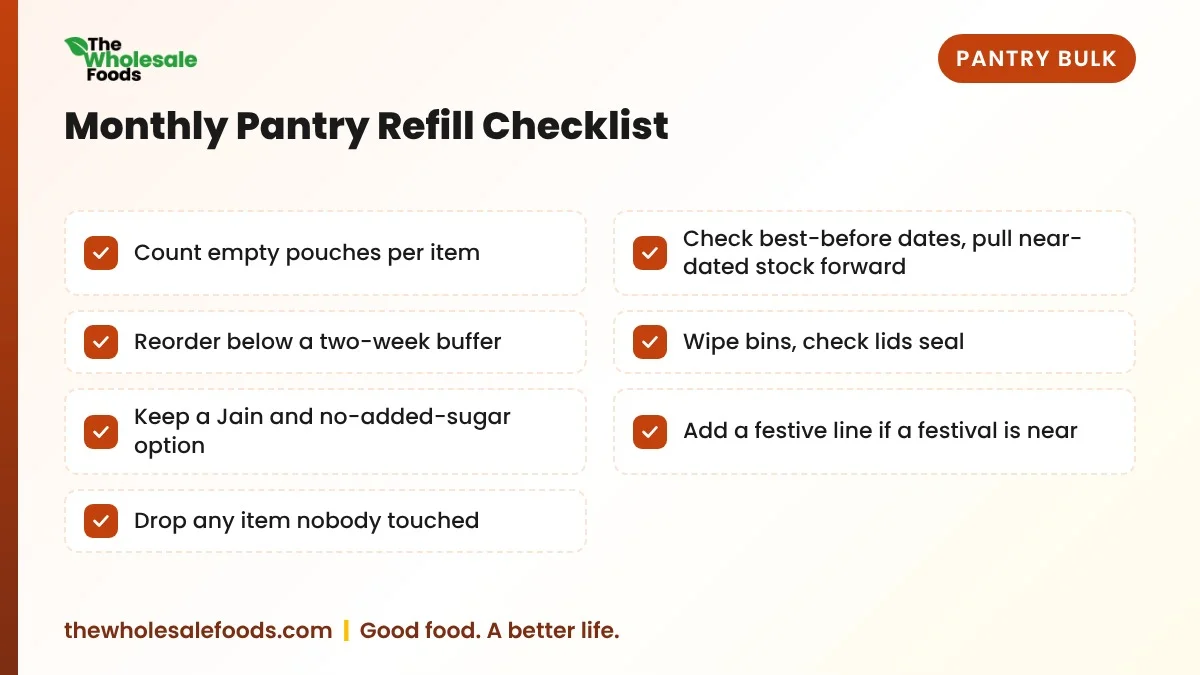
Print this and tick it once a month; it takes ten minutes.
- Count empty pouches per item and write the weekly burn rate
- Check best-before dates and pull anything inside 30 days to the front
- Reorder anything that will fall below a two-week buffer
- Wipe the bins, replace scoop and check lids seal
- Confirm the quiet shelf has a Jain and a no-added-sugar option
- Add a festive or gifting line if a festival falls in the next 45 days
- Note one item nobody touched and drop it from the next order
Festival, Event and Corporate Gifting Orders
Bulk pantry work has a second half: events. A month before Diwali or a conference, order the same dry snacks in the same packs, since they travel to branch offices and client homes without a cold chain. Peri-Peri Almonds, Himalayan Salt Makhana and Oats Cookies pack well into hampers, and a mixed box reads better than a sweet box to most office recipients. For a client meeting or a evening of evening snacks at home, the same shelf works. Place festive orders two to three weeks ahead, and confirm the FSSAI licence details and batch dates with any supplier before a large one-time buy.
Stock Your Pantry With The Wholesale Foods
A well-run pantry is a boring pantry: the right four roles, fixed quantities, clean bins and a monthly count. If you are building healthy snacks office pantry stock from scratch, start with the makhana shelf, add khakhra and one cookie, and let the burn rate decide the rest.
Browse the makhana range, the khakhra range and the cookies range, or shop the full list. For a bulk or corporate order, send your headcount, your weekly consumption and your storage space through quick order or contact, on WhatsApp at +91 63528 07509 or to sales@thewholesalefoods.com. Our team can help you turn a monthly quantity list into a single order.