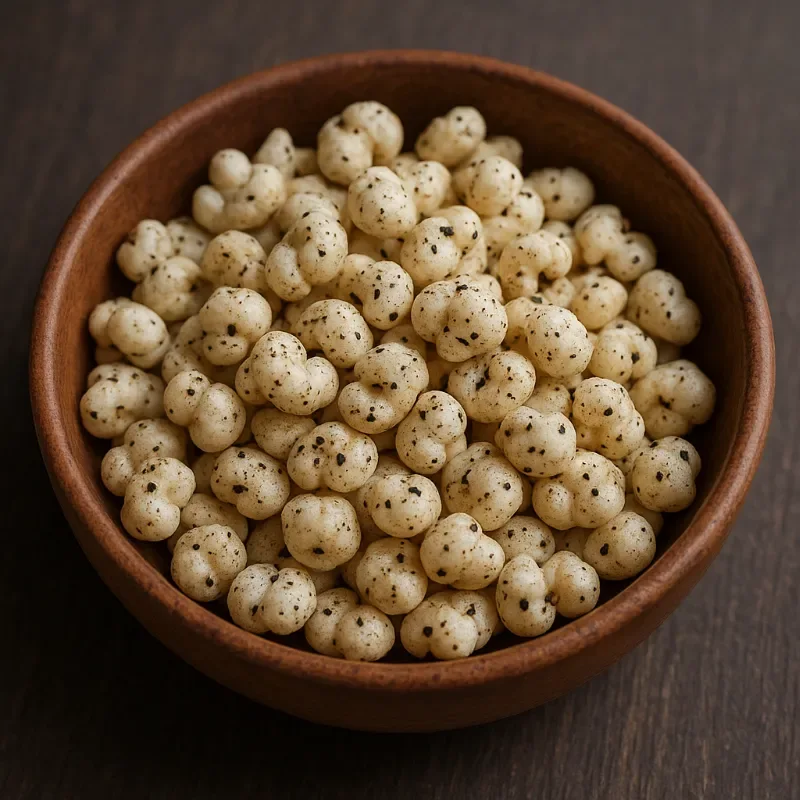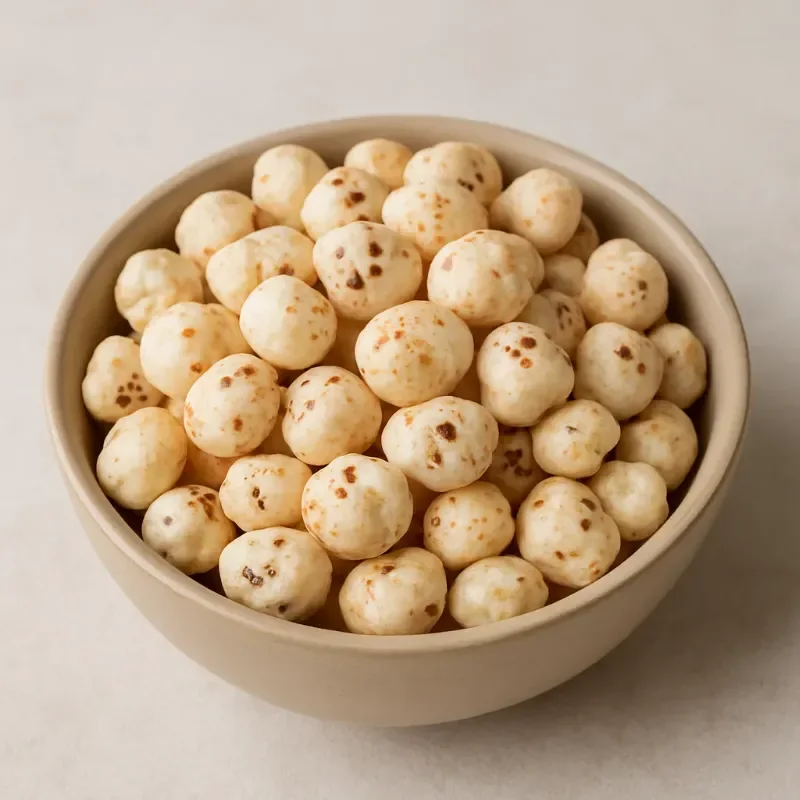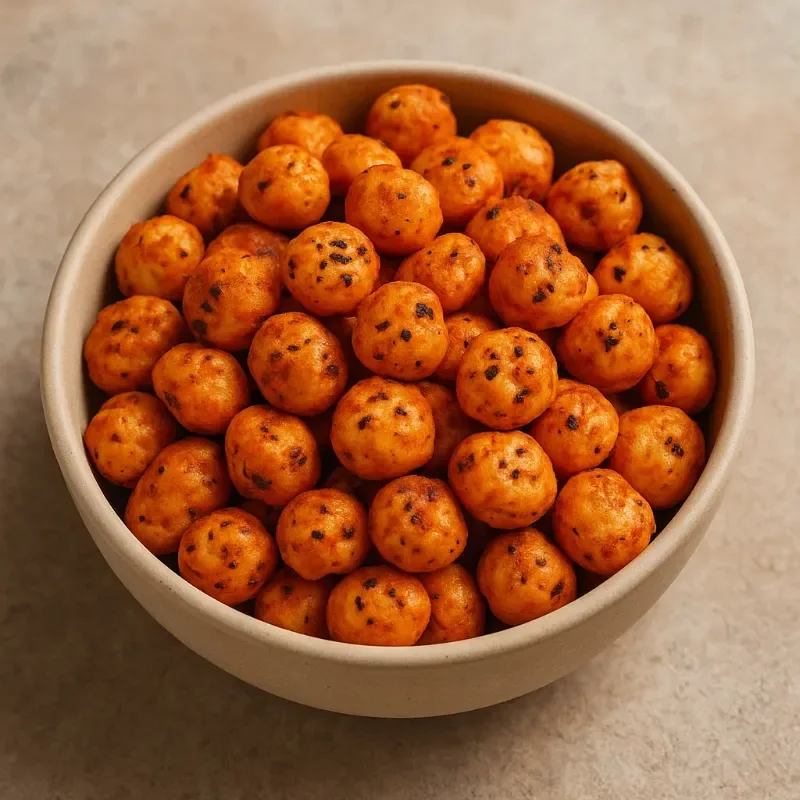

Four o'clock arrives and the kitchen fills with the smell of boiling milk, ginger and cardamom. The trouble is what goes on the plate beside those glasses. Biscuits go soft in ten minutes, fried namkeen turns oily by the second cup, and by evening the leftovers sit in an open bowl soaking up moisture. Good chai time snacks solve this with three things that stay crisp on the counter: roasted makhana, khakhra and oven-baked gathiya or puri.
This guide covers how much to put out per person, which flavours to mix so the platter does not taste flat, how to lay it out for four guests or forty, and a quick bake that turns stale khakhra into something worth serving again. It works for the daily family chai, an office tea break and a festive evening when relatives arrive unannounced.
What Belongs on a Chai Time Platter
Chai is sweet, milky and hot, so the food beside it should be dry, salty and light. That is why Gujarati homes keep three bins out rather than one big bowl: a puffed item, a flat crisp item and a crunchy gram flour item. Each one answers the cup differently.
A balanced plate usually holds three or four snacks, and one of them should be something people can eat with one hand without leaving crumbs. If everything on the table is the same texture, guests keep reaching for the cup instead. The Healthy evening snacks round-up covers the same logic for the 5 pm slot at home.
- Makhana. Roasted fox nuts carry flavour well and stay light, so they suit elders and children on the same table.
- Khakhra. A thin wheat crisp that holds its crunch for hours and needs no refrigeration.
- Gathiya or puri. Oven-baked gram flour crunch that gives the platter its salt and bite.
- Nuts. A small handful of Flavoured almonds at one corner makes the spread feel deliberate.
How Much to Serve Per Person
Portioning is where most platters go wrong. Too little and someone tops up the bowl with a fistful of gathiya, too much and half a packet goes stale the next day. The numbers below assume chai is being served, not a full meal, and that the snacks are the only thing on the table.

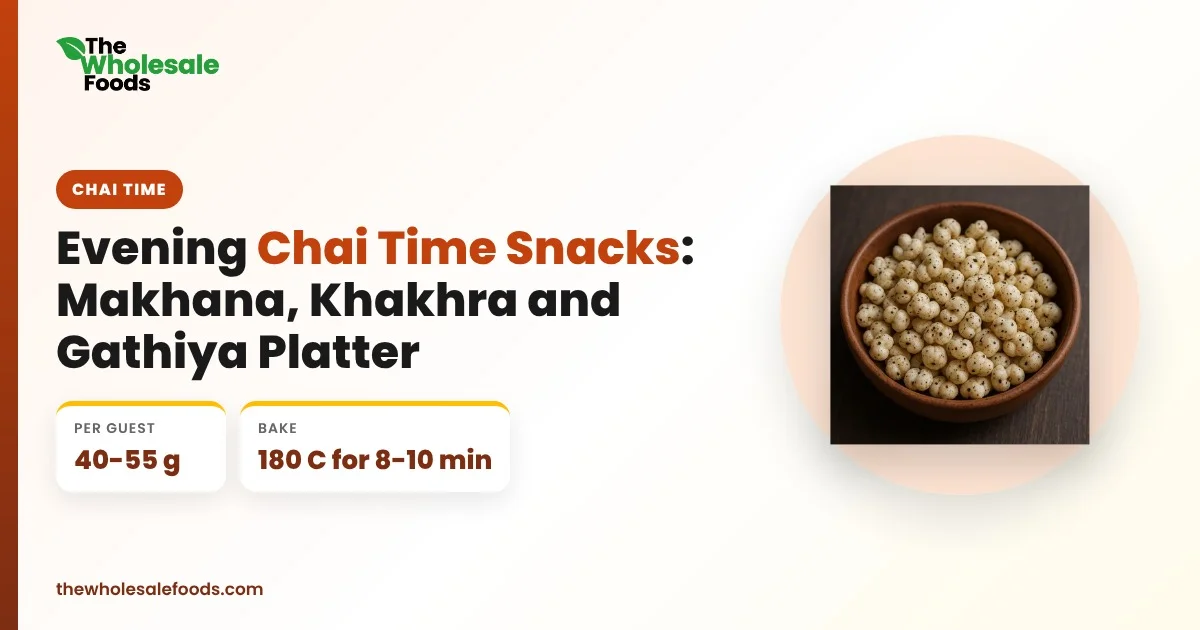
An adult lands at roughly 40 to 55 g in total, which is one small handful of makhana plus two khakhra or a loose half cup of gathiya. Children need about 20 to 25 g, and elders often prefer more makhana than gathiya because it is easier to chew. For a crowded standing gathering, plan 55 to 70 g per head since people eat while they talk.
Which Flavours to Combine
Salt alone makes a platter boring and heat alone makes people reach for more chai. The trick is one anchor flavour, one hot flavour and one cool or herbal one, with plain makhana as the filler that keeps the box from feeling too spiced.
A useful rule is to keep at least half the spread mild. Guests who skip chilli still need something, and a plain pile stops the spiced items from going to waste at the end of the evening.
- Anchor. Himalayan salt makhana or Black pepper and salt makhana sets the savoury tone without heat.
- Hot. Peri-peri makhana or Masala khakhra gives the first bite its kick.
- Cool. Pudina makhana or Methi khakhra clears the palate between cups.
- Tangy. Tangy tomato makhana or Achari khakhra works well in monsoon when the chai is weaker.
For Jain households and Navratri guests, the Jain peri-peri makhana and Jain peri-peri almonds keep the same heat level without onion or garlic seasoning. The flavour families themselves are laid out in the Types of makhana guide.
Three Ways to Set the Plate
The same three packets look different depending on how you arrange them. Pick one method per occasion instead of mixing all of them.
The everyday family tray
One large plate, three small bowls inside it, makhana in the middle because it is what everyone eats first. Keep the bowls shallow. Deep bowls hide the khakhra underneath, and stacked khakhra crack under their own weight within an hour.
The guest platter
A round steel platter with the khakhra fanned around the edge like a ring, gathiya heaped in one wedge and makhana filling the remaining space. Warm the gathiya for a few minutes before guests sit down and the whole platter reads as freshly made. This is the version described in the Savoury makhana and khakhra snacks for guests post.
The grazing table
For forty people or more, skip the single platter and set four to six small stations along a counter, each with a different flavour. Crowds eat what is nearest to them, so one big bowl at the centre gets emptied in fifteen minutes while the corners stay full.
Enjoying this read? Get more like it.
Get fresh snack inspiration and updates from our team.
A Quick Bake for Stale Khakhra
Humidity is the enemy of a crisp platter, especially in the monsoon and in coastal kitchens. A short bake brings most softened khakhra and gathiya back without any oil.
- Heat the oven. Set it to 180 C and let it reach temperature before the tray goes in.
- Spread in one layer. Keep the khakhra flat and the gathiya in a single layer so steam escapes instead of softening the batch.
- Bake briefly. Eight to ten minutes for khakhra, six to eight for gathiya, turning the tray once halfway.
- Cool on a rack. Two minutes off the tray, or the pieces steam themselves soft again in their own heat.
- Season after. A light dusting of chaat masala or a squeeze of lemon goes on after baking, never before.
Crisp is a habit, not a recipe: bake less, cool faster and close the jar tight.
Makhana does not need the oven. A dry kadhai on medium heat for three to four minutes with a pinch of salt brings back the roast, and it is the safer route when children are helping.
Chai Time Snacks for Forty Cups
Say you are stocking the pantry for a 40-person office evening or a house full of wedding guests. Work from the adult portion of 40 to 55 g and split the total across the three bins rather than buying one packet of each.
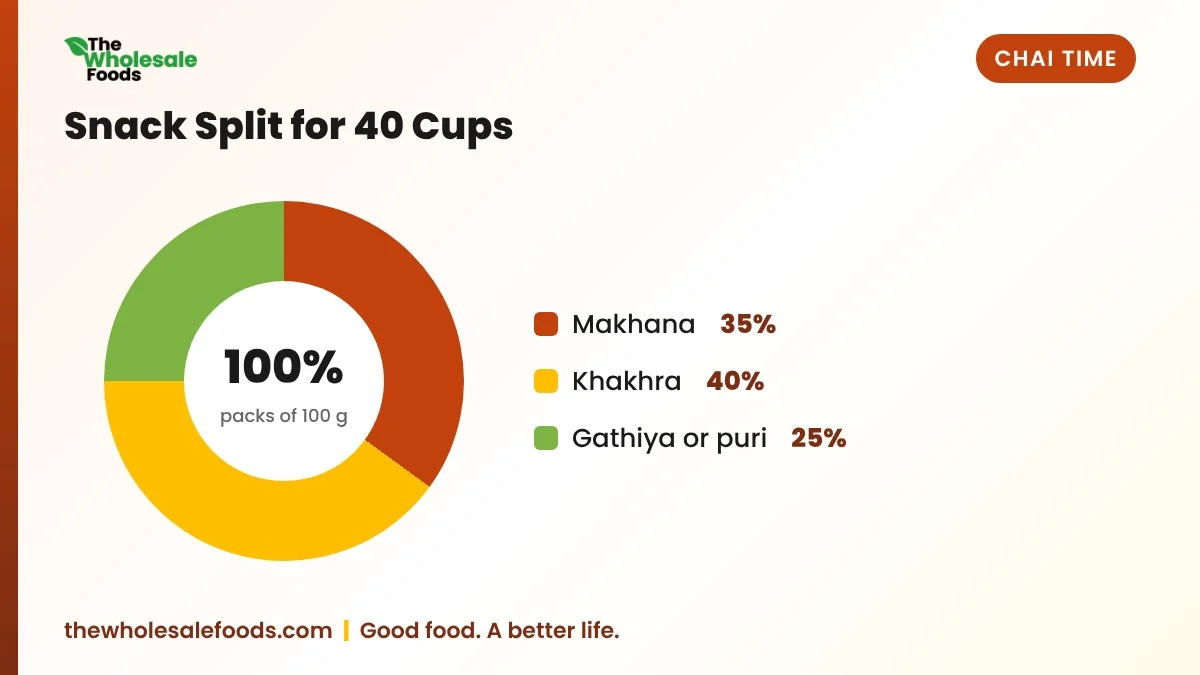
That comes to roughly 1.6 to 2.2 kg of snacks for 40 people, with khakhra carrying the largest share because it is the cheapest way to fill a plate and the last thing to go soft. Since most wholesale packs arrive as 10 pouches of 100 g, open only what the evening needs and keep the rest sealed. Anyone planning a longer event list should read the Canteen snack menu for 100 people for the same maths at a bigger scale.
Storage and Freshness
Once a packet is opened, the clock starts. An airtight steel or glass jar on a cool, dry counter beats the original pouch clip, and a jar that has been in the sun all afternoon undoes the morning's baking.
- Keep jars away from the stove. Steam from the chai kadhai settles into an open bowl within minutes.
- Close packets within a day. Opened makhana loses its roast overnight in humid kitchens.
- Store khakhra flat. Standing packets on their edge crack the pieces at the bottom.
- Check the best-before date on the pack. Rotate stock so the oldest pouch is the one opened next.
- Never refrigerate. A cold jar sweats the moment it comes out, and that moisture is what you are trying to avoid.
Unopened pouches keep to the date printed on the pack when held cool and dry, away from direct sunlight. For a fuller label-reading walkthrough, see Healthy snacks for diabetics, which explains how to read a nutrition panel before you buy.
What to Check Before Buying in Bulk
Bulk chai supply is a different purchase from a single packet, and the checks are practical rather than about taste.
- Pack size. 100 g pouches suit an office pantry because one packet finishes in one evening; loose 1 kg bags suit a home that snacks daily.
- Shelf life on the pack. Note the date for every carton you receive and label the jars so the older stock goes out first.
- Ingredient list. Confirm the seasoning matches what you served last month, since a changed flavour upsets a standing menu.
- Storage space at the site. You need a cool, dry, closed shelf, not a store room that gets damp in the monsoon.
- Samples before a large order. Try one pack of each new flavour before committing to a festive or monthly supply.
- Seller FSSAI licence. Ask for the licence details in general terms and keep them on file for your own records.
Prices, minimum quantities and delivery windows vary by order, so settle those directly with the supplier rather than assuming a standing figure.
Conclusion
Chai time snacks work when the plate has a puffed item, a crisp item and a crunchy item, portioned at 40 to 55 g per adult and kept in closed jars away from steam. Roasted makhana, khakhra and oven-baked gathiya cover all three without any frying, and a short bake at 180 C recovers whatever the humidity has softened.
Build your evening spread from the Makhana range, the Khakhra range and the Full shop, and send a Quick order if you are stocking an office pantry or a festive evening in bulk.
Disclaimer: This article is general food and nutrition information, not medical advice. People with health conditions or allergies should follow their doctor's advice.