

Most Indian kitchens keep a steel box of dry fruits on the counter, and the same question comes up at every birthday and every doctor visit: how many nuts a day is actually right? The answer is smaller than most families guess, and it changes with age. A handful is not one size. A toddler's handful, a school child's handful and an office-goer's handful are three different numbers.
This guide gives you those numbers in grams and in counting, shows soaked versus roasted options, and then places nuts inside a real breakfast, with rolled oats, granola, cookies and peanut butter, so the bowl gets finished instead of pushed to the back of the cupboard.
Start With the Handful, Not the Packet
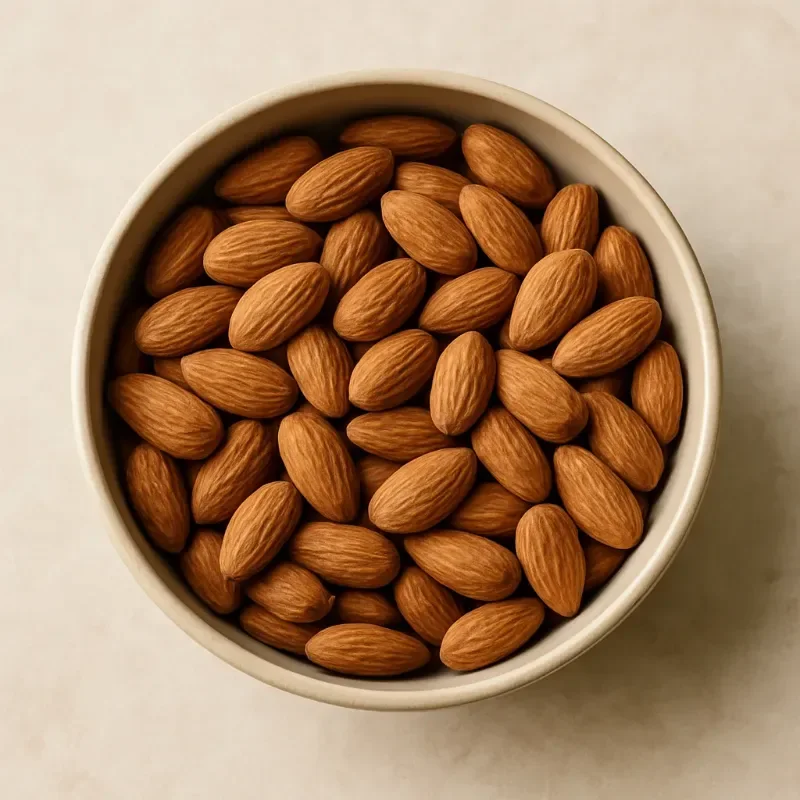
Nuts are energy-dense, so the serving conversation is about space, not permission. A 100 g packet of almonds disappears in front of a television without anyone deciding to eat it. Public food composition data puts a plain almond at roughly 3-4 g, so six to eight nuts land near 20-25 g, which is the range most adult guidance treats as a sensible daily nut serving.
The practical trick is to pour, never to eat from the bag. Take a small bowl, fill it once, close the packet and put it away. Everyone in the house then sees the same portion, and the packet stops being a bottomless container.
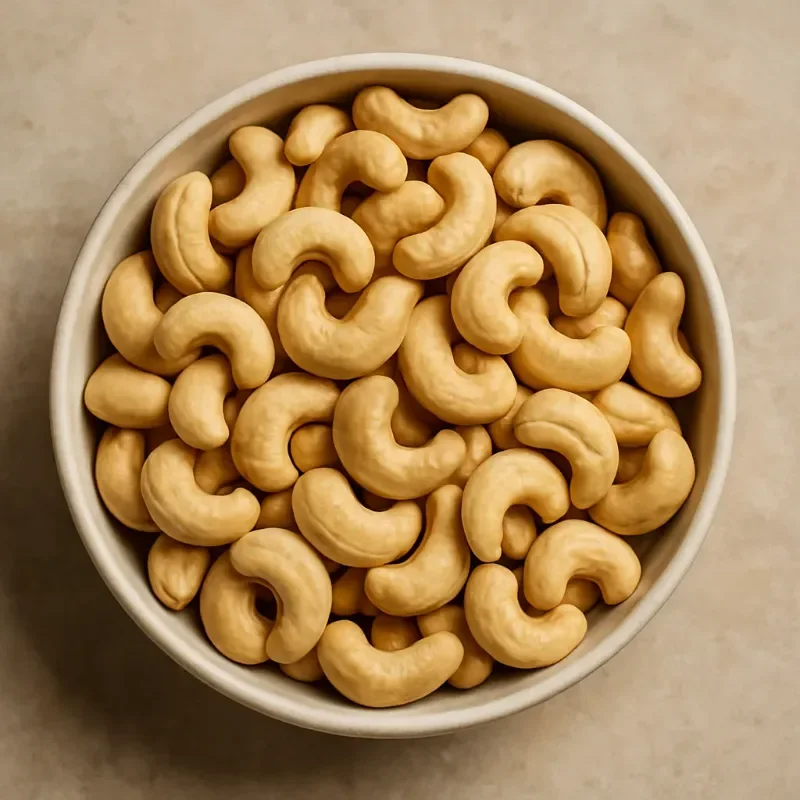
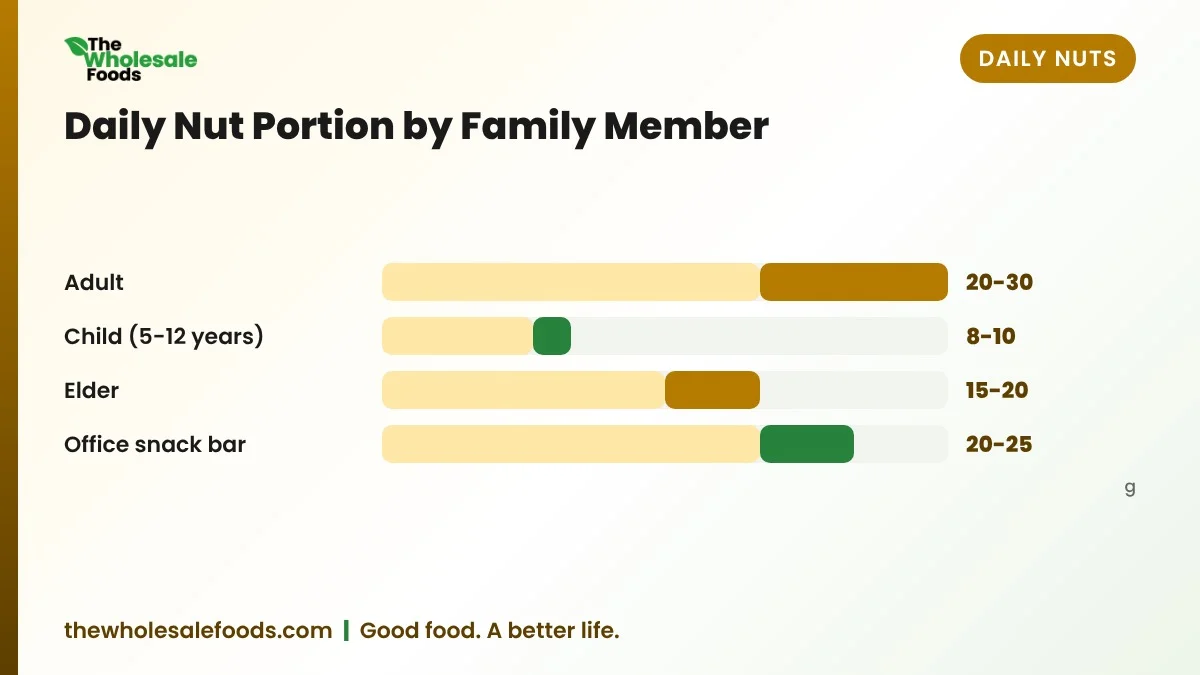
- Adults. A level handful of 20-30 g, which is about 6-8 almonds or 10-12 cashews.
- School children. Half an adult portion, around 8-10 g, which is 3-4 almonds or 5-6 cashews.
- Elders. 15-20 g, softened by soaking if chewing whole nuts is tiring.
People with diabetes, kidney conditions or nut allergies should confirm portions with their doctor or dietitian, and the same applies during pregnancy.
Portion Sizes for Every Member of the House
The table below keeps the numbers together so you can stick it inside the cupboard door. Weight beats counting once you have a small kitchen scale for a week, because nut sizes vary a lot between batches.
| Who | Daily Nut Serving (g) | Count Guide | Note |
|---|---|---|---|
| Adult | 20-30 | 6-8 almonds or 10-12 cashews | Split between two sittings |
| Child (5-12 years) | 8-10 | 3-4 almonds or 5-6 cashews | Powdered or chopped only |
| Elder | 15-20 | 5-6 almonds | Soak overnight for easier chewing |
| Office snack bar | 20-25 | 1 small pouch | One pouch per person, not per desk |
A child under five should not be given whole nuts or whole makhana, since both are a choking risk. Grind or crush them and mix into oats, porridge or dough.
Soaked, Roasted or Raw: What Changes
Soaking does not turn a nut into something else. It softens the texture, which helps elders and anyone with dental trouble, and it removes the dry, dusty edge that makes raw nuts hard to finish slowly. Roasting adds salt and flavour, which is exactly why roasted nuts are easier to overeat.
- Soaked. Eight almonds soaked overnight in water and peeled in the morning are softer and slower to eat than dry ones.
- Raw and dry. The default for weight-conscious snacking, since there is no added salt or oil to blur the portion.
- Roasted and flavoured. Peri-Peri, barbeque or herbs and chilli coatings make nuts a proper snack rather than a health item, so treat them as part of the evening snack slot, not an extra.
For a Jain household, Peri-Peri Jain Almonds carry the heat without onion or garlic in the seasoning. Salt levels matter if anyone in the house is watching blood pressure, so keep the salted nuts to one slot a day and the rest plain.
A Seven-Day Breakfast Plan That Uses the Portion
Nuts work best when they sit inside a breakfast you already eat, rather than as a separate chore. Say you are feeding a family of four and want the daily nut count finished before 9 am. This plan spreads the same 20-30 g adult portion across oats, granola and a mid-morning bowl.
- Sunday night, soak. Put 6-8 almonds per adult and 3-4 per child in a small steel bowl with water. Cover and leave on the counter.
- Build the overnight oats. Layer Rolled Oats with curd or milk, a spoon of peanut butter and 4-5 chopped walnuts or almonds in a jar. Refrigerate.
- Morning one, hot option. Cook Instant Oats in two minutes, stir in 10 g of powdered nuts and a little jaggery.
- Morning two, crunchy option. Pour 30-40 g Original Granola over curd, then add 5 chopped almonds on top.
- Mid-morning slot. Hand out the soaked and peeled almonds with a glass of buttermilk, so the nuts are not competing with the oats bowl.
- Pack for school or office. Two Oats Cookies plus a small box of 5 cashews travels better than a loose handful.
A nut eaten inside a meal stays in the plan; a nut left in a bowl on the counter does not.
On the two days when breakfast runs late, one Salted Almonds pouch at the desk covers the count, and the evening snack gets skipped instead.
Enjoying this read? Get more like it.
Get fresh snack inspiration and updates from our team.
Smarter Swaps When the Craving Is Sweet
A sweet craving at 5 pm is where most nut portions go wrong, because a bowl of halwa arrives alongside a fist of cashews. Keep the nuts and swap the other item.
- Granola for biscuits. A 30-40 g scoop of granola over curd reads sweeter than three cookies and leaves room for the nuts.
- Nut butter for jam. A thin layer of peanut butter on toast carries sweetness from the nuts themselves.
- Flavoured nuts for candy. Herbs and Chilli Almonds satisfy the need for something with a strong taste without sugar.
- Dark chocolate shards for dessert. Two squares with a few chopped almonds finishes a meal better than a second sweet dish.
Chocolate cravings in a sweet-toothed house are handled well by Chocolate Granola in a fixed 30 g scoop, since the box itself stops the serving. Anyone managing blood sugar should treat jaggery and chocolate versions as an occasional item and check with their dietitian.
How Nuts Fit Into a Day of Food
Nuts sit inside the day, not beside it. The same 20-30 g that goes into the morning oats should not also appear in the evening namkeen bowl.
| Time | What Goes In | Nut Content (g) |
|---|---|---|
| Breakfast, 8 am | Overnight oats with peanut butter | 8-10 |
| Mid-morning, 11 am | Soaked almonds with buttermilk | 10-12 |
| Evening, 5 pm | Granola bowl or a flavoured nut pouch | 5-8 |
| Day total | 20-30 |
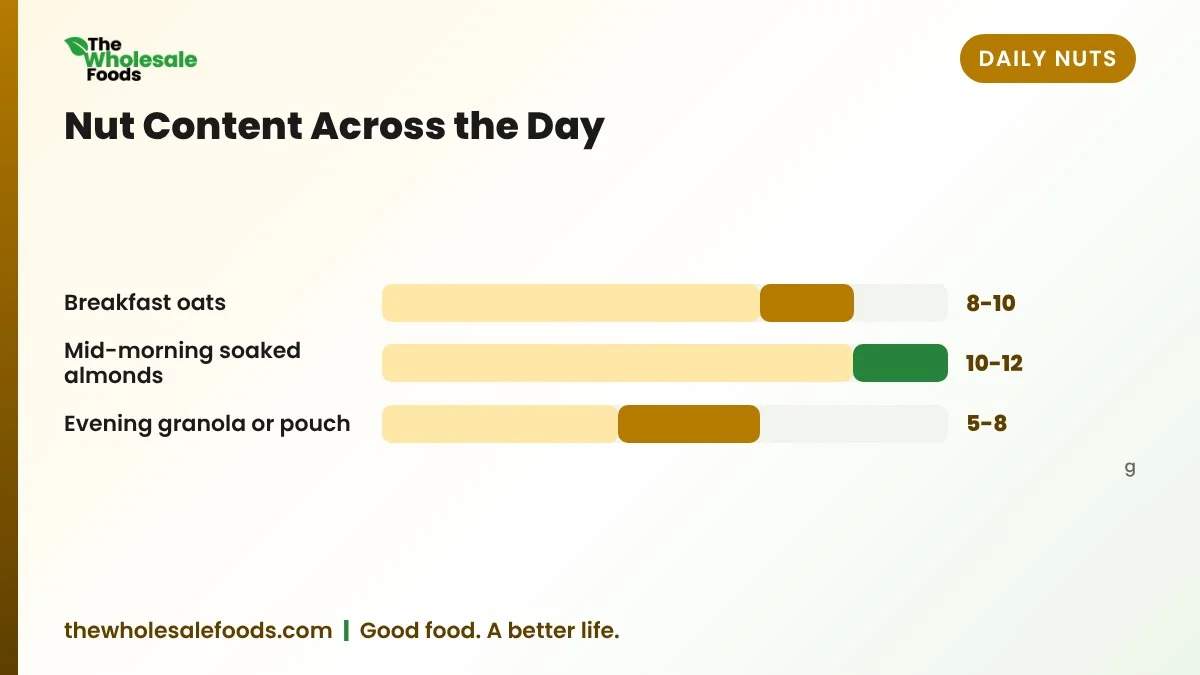
Spread across three slots, the portion feels generous. Eaten all at once at 9 pm, it feels like a chore and often causes that heavy, thirsty feeling people blame on nuts.
Storage and Freshness
Nuts carry oil, and oil turns stale before the pack's best-before date if the jar is open in a warm kitchen. Summer heat and monsoon humidity are the two enemies in most Indian homes.
- Airtight glass or steel. Transfer pouches the day they arrive, especially in coastal and humid cities.
- Cool and dry, away from the stove. Keep the box off the counter next to the burner and out of direct sun.
- Refrigerate what lasts beyond a month. Ground nut powder, peanut butter and granola keep their taste far better in the fridge.
- Soak only the day's amount. A bowl of soaked nuts left out for a second day goes slim and must be discarded.
- Check the best-before date on every pack and write the opening date on the jar with a marker.
For a stocked office pantry, keep unopened pouches in the store room and only one working jar on the counter. Wholesale packs such as 10 pouches of 100 g stay fresh longer because the opened pack is finished quickly.
What to Check Before Buying Nuts in Bulk
Bulk dry fruit buying saves effort, but a 1 kg carton of almonds becomes a problem if it sits open in a hot store room for four months. Before a bulk or corporate order, run through this list.
- Pack size against household size. Choose 100 g pouches for a home or a single desk, and larger cartons only where the nuts move fast.
- Shelf life printed on the pack. Check the batch date on every carton on arrival, not just the first one.
- Ingredient list. Plain almonds should list almonds. Flavoured ones list the seasoning, salt and oil, so read it if anyone is avoiding chilli or salt.
- Storage space at the delivery point. Confirm there is a cool, dry, rodent-proof shelf before ordering.
- Seller's FSSAI licence details on the invoice or pack, in general terms.
- Sample before a large order for gifting or an event, so flavour and size match expectations.
For office pantries and gifting, the Bulk snack pantry guide covers mixing nuts with baked and roasted snacks so the counter does not look like one giant nut bowl.
Conclusion
So, how many nuts a day: 20-30 g for adults, 8-10 g for children and 15-20 g for elders, split across two or three slots and always poured into a bowl rather than eaten from the packet. Soak what you want to slow down, roast what you want to enjoy as a snack, and let the oats, granola and peanut butter carry the nuts into breakfast so nothing is forgotten. Browse the Nuts and dry fruits range, the Granola and Oats shelves to stock the week, and use Quick Order for office pantries and festive gifting.
Disclaimer: This article is general food and nutrition information, not medical advice. People with health conditions or allergies should follow their doctor's advice.