
You open the jar at 7 in the morning, spoon out what looks like oats, and the bowl turns out sweet and heavy, or pale and chewy, depending on which jar you grabbed. That is the granola vs muesli question most Indian kitchens hit once they start eating cold breakfasts, and the two are sold on the same shelf with similar pictures on the pack.
This guide breaks the difference down in plain terms: what goes into each mix, how much a spoonful actually weighs, how to soak or cook each one for an Indian palate, and how to build a bowl that keeps you full till lunch. It also covers portions, storage and the label lines worth reading before you buy a wholesale pouch for the house or the office pantry.
What Separates Granola from Muesli
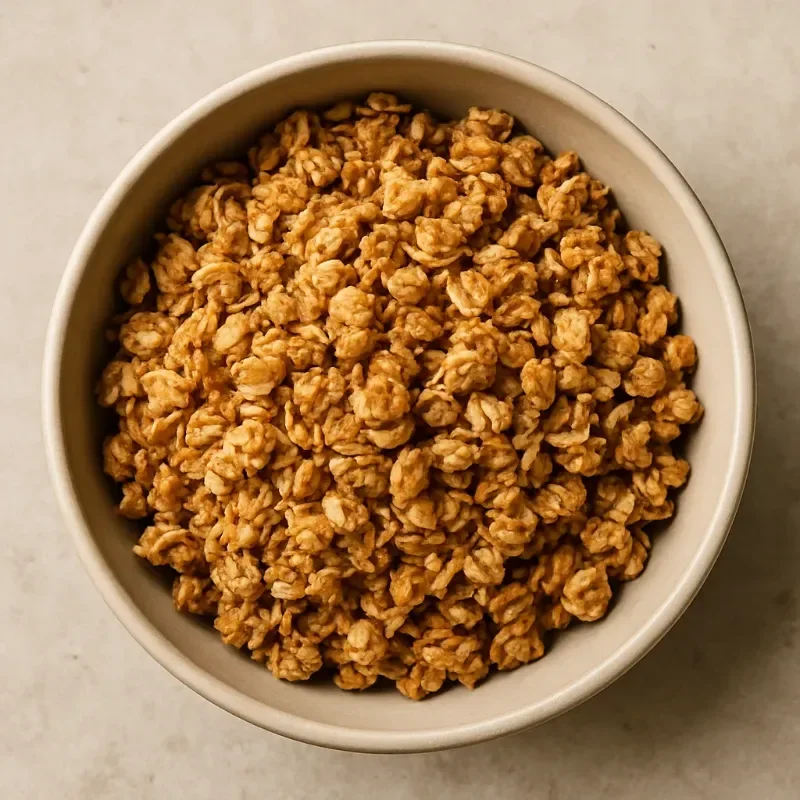
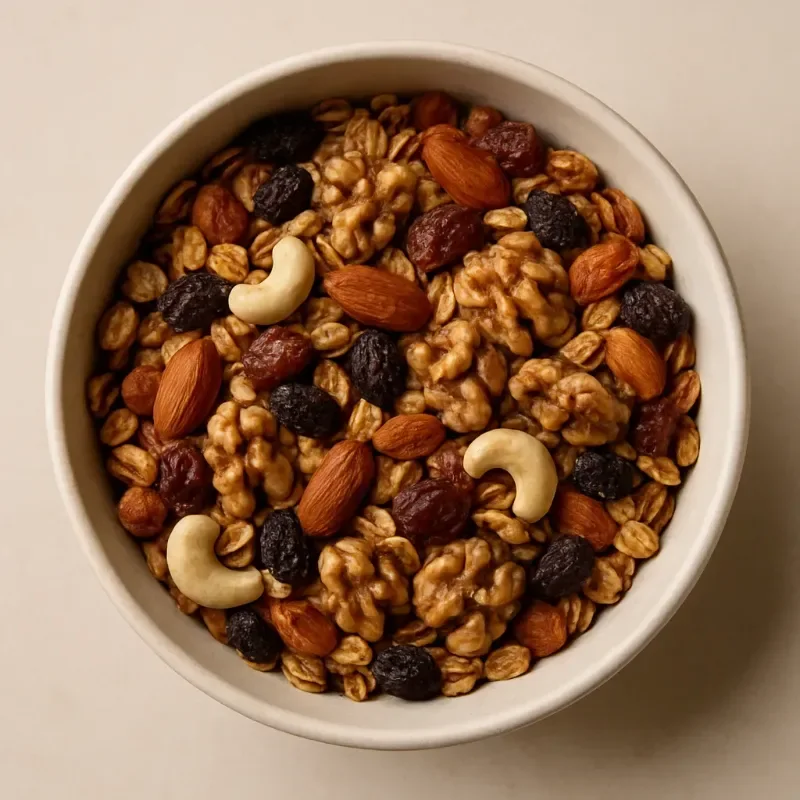
The difference is heat and sweetener, nothing more. Muesli is a raw mix: rolled oats, wheat or barley flakes, nuts, seeds and sometimes dried fruit, nothing baked and usually nothing added for sweetness. Granola starts as that same mix, gets tossed with a sweetener and a fat, then goes into an oven until it browns and clumps.
That one step changes everything you notice in the bowl. Granola is crunchy, sweeter and lighter by weight, so a cup of granola holds fewer grams of oats than a cup of muesli. Muesli is neutral, chewy or soft depending on how you soak it, and it takes the flavour of whatever you pour on it, which is why milk, curd and a mashed banana matter more with muesli.
Granola vs Muesli Side by Side
Read the two bowls as dry weights, since a spoonful of one is not the same as a spoonful of the other. Granola clusters trap air, so 40-45 g fills a bowl and looks generous, while 30-35 g of loose muesli looks like less food but carries more actual oats and flakes. In a 60 g dry serving, granola typically brings 6-10 g of added sugar from jaggery, honey or syrup, while a plain muesli brings close to none and leans on dried fruit for sweetness.
Nuts and seeds sit in both, usually 8-12 g in granola and 5-8 g in a basic muesli, which is where the fat and the crunch come from. The dry oats and flakes column is the one that decides fullness: muesli runs 50-55 g against granola's 40-45 g per 60 g serving, so muesli gives more oat and fibre per spoon. If you want the same oat load from granola, you have to eat about 15 g more of it, and that is where the sugar quietly comes along.
Which One to Pick for Each Situation
Choose by what the morning has to give you: time, appetite and how much sugar you want in the bowl.
- Weight management. Muesli wins on oats per gram, so a 40-45 g dry serving with a full cup of milk or curd fills a bowl without extra sweetener.
- Kids' bowls. Granola usually works better because of the crunch, and a child eats it with curd and fruit instead of reaching for a biscuit tin.
- Morning blood sugar. A plain unsweetened muesli or Overnight oats made at home keeps added sugar near zero, and people with diabetes should confirm portions with their doctor or dietitian.
- Travel and tiffin boxes. Granola survives a dry box for hours, while muesli turns dusty and powdery unless it is soaked the night before.
- Office pantry bowls. Granola and muesli both need a topping station, and a mix of both covers more people, as covered in the Office pantry bulk guide.
- Gym mornings. A 50-55 g dry portion of either, with a spoon of Peanut butter stirred in, gives a heavier bowl that holds for three to four hours.
Three Ways to Eat Muesli and Granola
Both packs work in the same three methods, and the only thing that changes is the liquid and the waiting time.
- Soak it overnight. Stir 40-50 g dry muesli with 150-180 ml milk or curd and 10-12 g nuts in a jar, cover it and refrigerate for 8-12 hours, then add fruit in the morning.
- Cook it in five minutes. Simmer 40 g muesli in 180 ml milk with a pinch of cardamom, stirring twice, then turn off the heat and let it rest two minutes before serving.
- Eat it dry as a topping. Spoon 25-30 g granola over curd, sliced banana or grated carrot in the last minute before eating, so the clusters stay crisp.
A bowl only works if it has a base, a protein and something fresh; the label decides the base, your hand decides the rest.
For a granola bowl, keep the granola to 30-35 g and let fruit, curd and nuts fill the rest of the bowl. That keeps the sweet part of the breakfast in control while the bowl still feels indulgent. A full week of these combinations, including the jars that hold well in an Indian fridge, is laid out in the Weekly breakfast plan with oats, granola and nuts.
Enjoying this read? Get more like it.
Get fresh snack inspiration and updates from our team.
Building a Bowl That Holds Till Lunch
A bowl that leaves you hungry at 11 am is usually missing one of four parts. Fix the parts and the same oats and granola suddenly work.
- Base. 40-60 g dry rolled Oats, granola or muesli; use Rolled oats or Instant oats when you are making the base yourself.
- Protein. 150-200 ml milk, a cup of curd, or 20-25 g of Plain almonds and Plain cashews spread across the bowl.
- Fresh fruit. One banana, half a cup of papaya, or a handful of berries; this adds volume and water, which is what makes a bowl feel like a meal.
- Crunch or flavour. 5-10 g seeds, coconut, or 10 g dark chocolate granola for a weekend bowl, as the sweet note in the High-protein vegetarian snacks list.
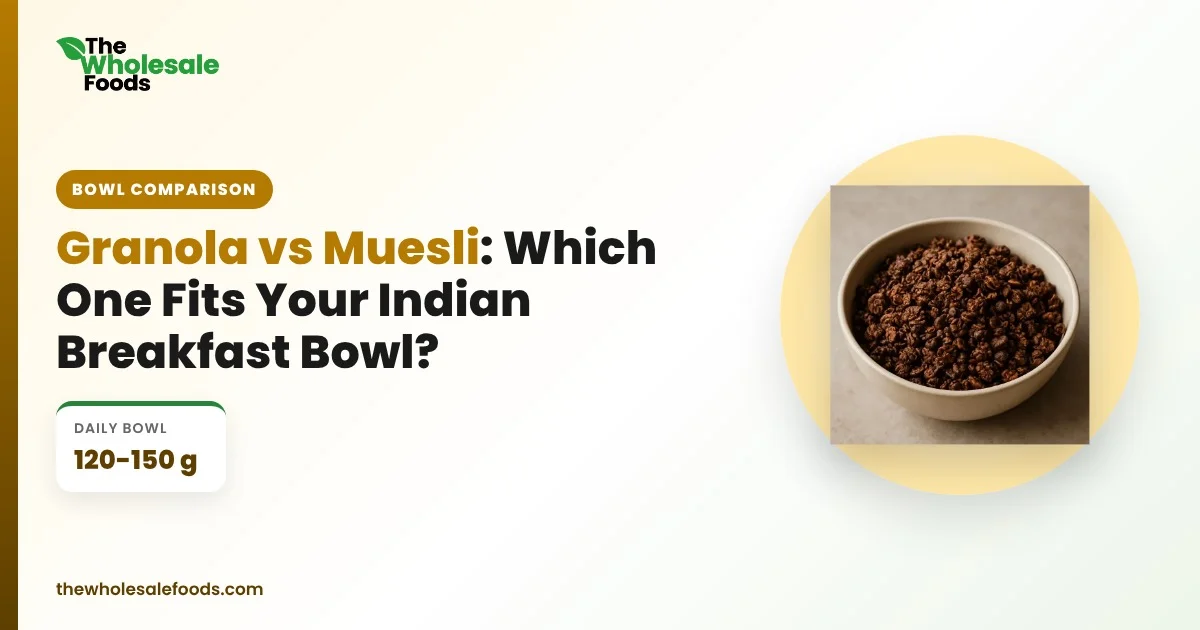
The daily dry portion for most adults sits at 120-150 g across the whole day if breakfast is your only oats meal, and 40-50 g dry if the bowl is one meal among three. Kids need about half that, so 25-30 g dry with curd and fruit, and keep whole nuts crushed for children under five.
Reading the Pack Before You Buy
Two packs can both say "oats and nuts" and be different foods. Turn the pack over and read four lines.
- Ingredient order. Whichever item is listed first is the biggest part by weight. Rolled oats or oats should be first, not sugar, jaggery or corn flakes.
- Added sugar. Look for jaggery, honey, glucose syrup, sugar or maltodextrin in the ingredient list, then read the carbohydrate line; 6-10 g carbohydrate from sweetener per 60 g serving is a normal granola figure.
- Nuts and fruit share. A pack that lists nuts after dried fruit is mostly fruit, which tastes light and carries more sugar per spoon.
- Fatty acid note and best-before. Baked granola keeps longest; a pack with a printed best-before date and a FSSAI licence number from the seller is the safer wholesale buy.
For a fuller walkthrough of the same label lines, the sister post on How many nuts a day covers the nut portion that goes on top.
What to Check Before Buying in Bulk
Wholesale pouches make sense once two or three people eat a bowl most mornings, but a 10-pouch carton of a mix nobody finishes is wasted money.
- Pack size against headcount. 10 pouches of 100 g is 1 kg, which is roughly 20-25 bowls at 40-50 g dry; a two-person house finishes that in three to four weeks, a 40-person office pantry much faster.
- Shelf life on the pack. Check the best-before on the carton, not the outer box, and rotate pouches so the oldest opens first.
- Two formats, not one. Buy one sweet granola and one plain base such as Original Granola or Dry Fruit Granola, so the bowl can go sweet or neutral.
- Portioning in an office. Keep 40 g scoops or single-serve pouches at the counter; loose serving spoons are how a bowl crosses from 6 g of sugar to 15 g.
- Samples first. For a pantry, cafe or gifting order, ask for a small sample lot before a full carton, and send the requirement through Quick Order.
Storage and Freshness
Both mixes fail in the same way: humidity. Granola clusters go soft and chewy within a day of opening in a monsoon kitchen, and muesli picks up a stale, flat taste as the nuts turn oily.
- Move both into an airtight jar with a seal that actually closes, and keep the jar in a cool, dry cupboard away from the stove, the sink and the window.
- Keep the original pouch inside the jar if it has a zip, since the printed batch and best-before details stay with the food.
- Finish an opened pouch within 3-4 weeks for granola and 4-6 weeks for muesli, and within that window even in winter months.
- Use a dry spoon every time, and never leave a bowl of soaked muesli out for more than two hours.
- If your kitchen gets above 30 degrees for weeks, store a nut-heavy granola in the fridge in a sealed box; it stays crisp and the nuts stop turning.
- Soaked jars keep two nights in the fridge at most, so make one jar at a time.
Conclusion
Granola and muesli are the same oats with one baking step between them, so the granola vs muesli choice comes down to whether you want crunch and sweetness in the bowl or a neutral base you flavour yourself. Keep the dry portion at 40-60 g, add milk, curd or nuts for protein and fruit for volume, and either pack becomes a breakfast that holds till lunch instead of a snack that leaves you hunting by 11 am.
Start with one plain base and one flavoured pack, and build the bowl your house actually finishes: Granola pouches, Oats cookies for the tiffin and a jar of nuts on the counter, all in the Shop, with bulk and pantry orders through Quick Order.
Disclaimer: This article is general food and nutrition information, not medical advice. People with health conditions or allergies should follow their doctor's advice.