
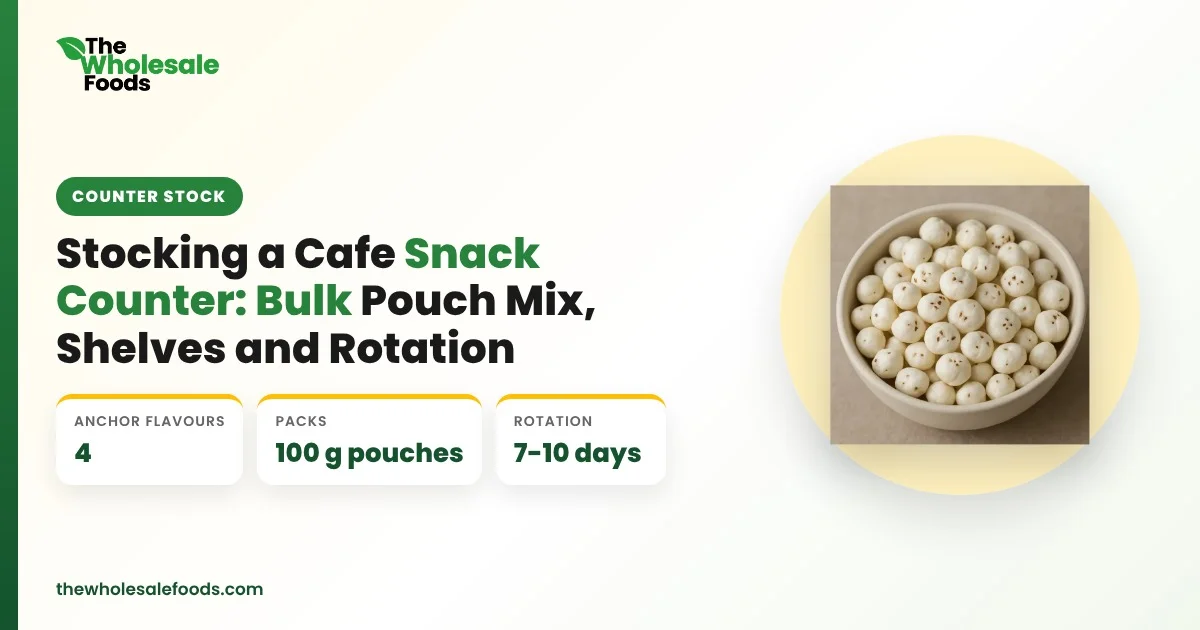
A snack counter in a cafe fails in two ways. Either the shelf looks empty by four in the afternoon, or half of it has been sitting there since the last festival and nobody wants it. Both are stock-planning problems, not sales problems, and both are solved before the pouches arrive.
This guide is for the person who actually decides: the cafe owner, the kiosk operator, the kirana retailer adding a healthy corner, or the manager running a gifting counter. If you are buying cafe snack counter bulk packs of makhana, khakhra, cookies and nuts, the plan comes down to four things: how many flavours to keep, how many pouches per week, how fast each tray must clear, and what to verify on the carton before you pay. For the wider pantry version of this thinking, see our Office pantry bulk guide.
Start From Your Counter, Not From the Catalogue
Most owners begin with a supplier list of twenty flavours and end up with twelve of them gathering dust. Begin instead with who stands in front of your counter and for how long.
A cafe with good coffee sells salty and crunchy, eaten slowly. A kiosk near a college gate sells cheap, filling and handheld. A shop shelf sells names people already recognise. A gifting counter sells presentation. Each of those needs a different pouch mix, and the numbers below are what those mixes look like in practice for a counter doing steady weekday trade.
Say you run a 20-seat cafe with a small standing counter and you want to add a healthy snack corner without freezing cash in stock. You would start with four to six flavours, order in 100 g wholesale pouches, and only widen the range once you can name the two that empty first.
What to Put on the Shelf, Pouch by Pouch
The mix below assumes one shelf of about a metre, or a counter riser with three rows. The count is pouches sold per week, not ordered, so a flavour you move three of should not hold a whole row.
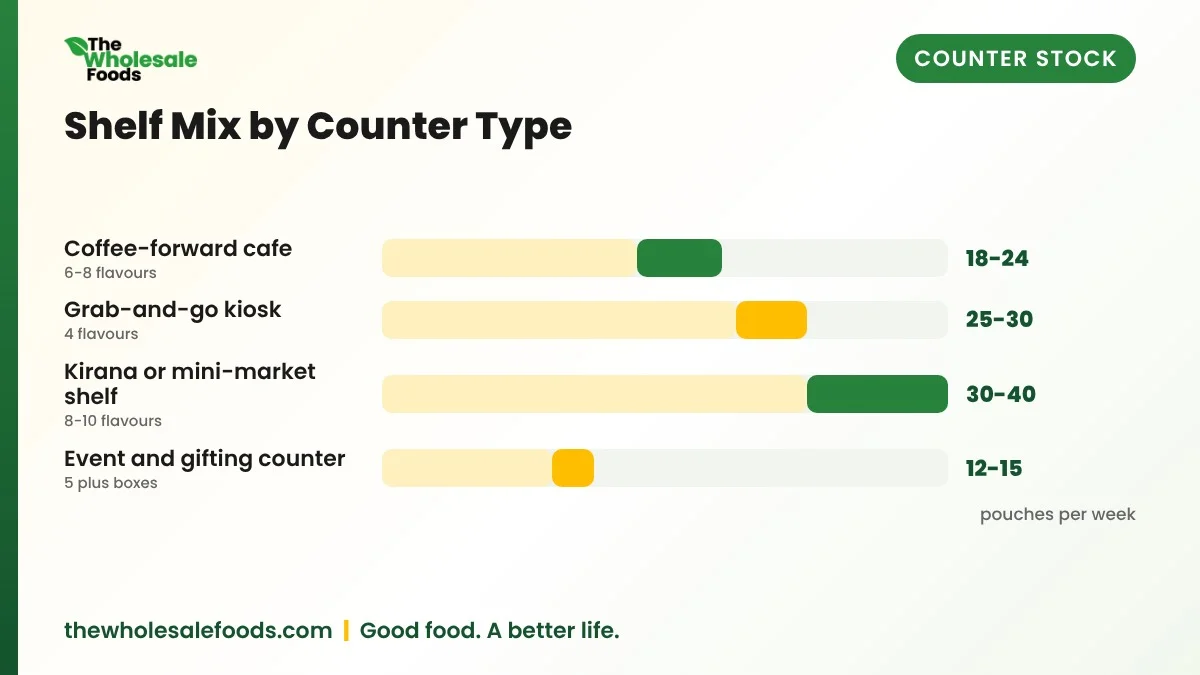
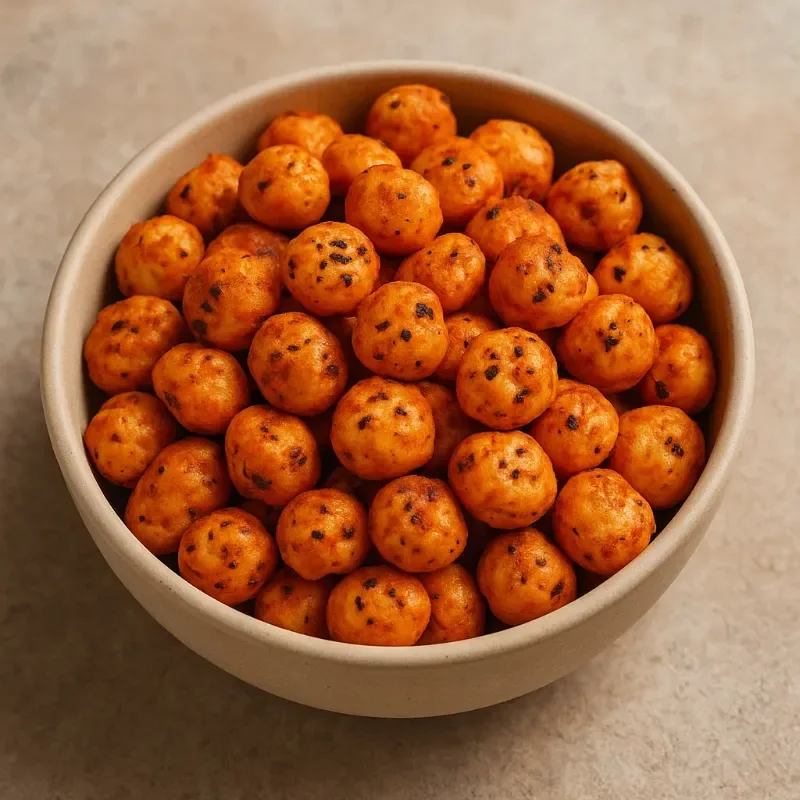
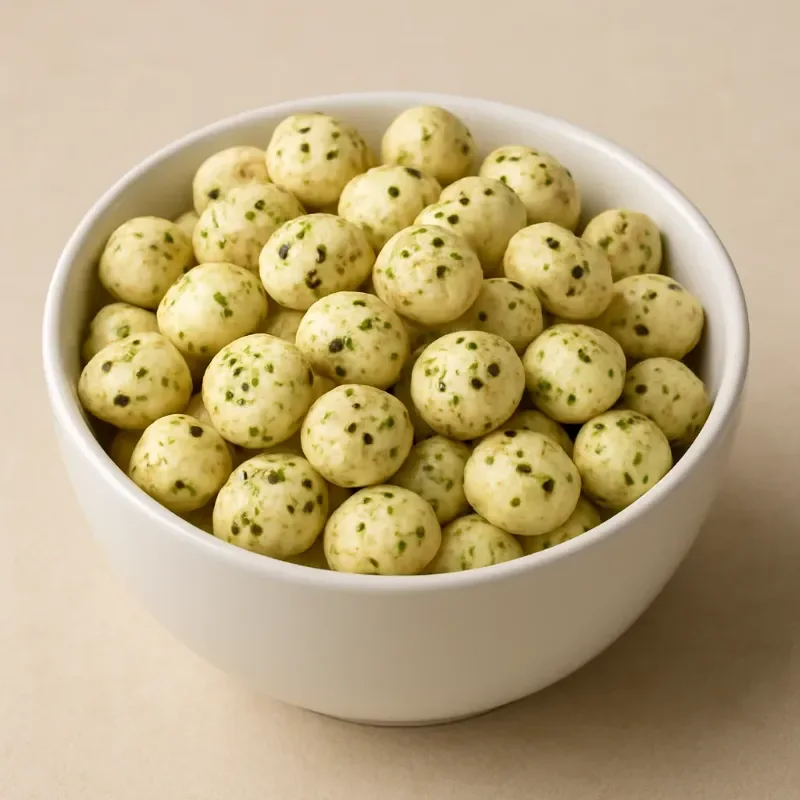
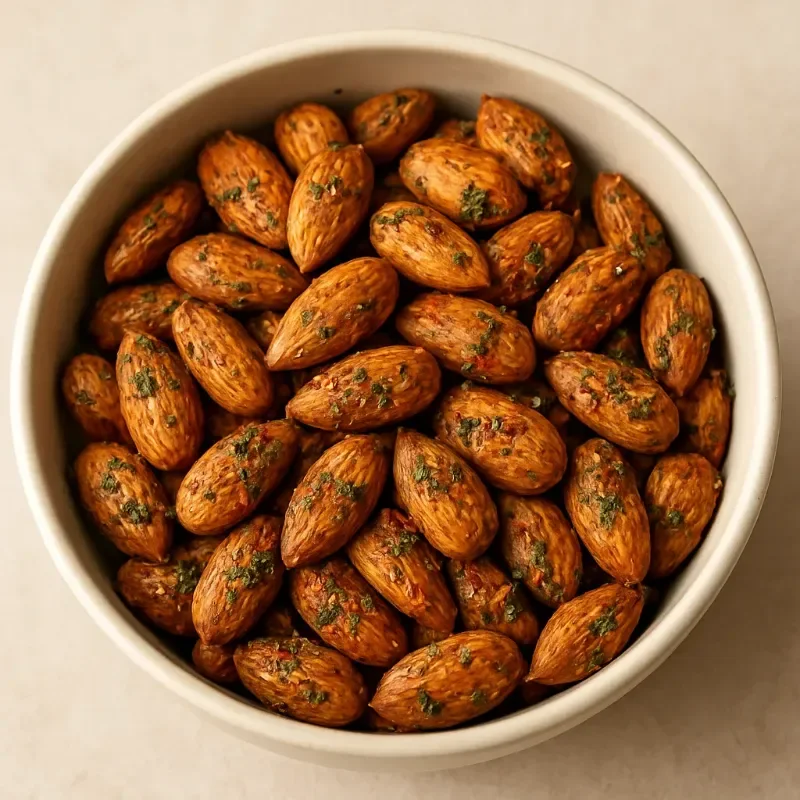
A coffee-forward counter carries the widest range because customers linger and try. Peri-Peri Makhana, Cream and Onion Makhana and Herbs and Chilli Almonds sit well beside a filter coffee. A kiosk needs the opposite: fewer options, bigger volume, and nothing fragile. A shop shelf can carry ten flavours because the shopper is reading labels, not waiting for a table. Event counters move the least by count and the most by value, which is where Plain Khakhra 200 g and gift boxes earn their space.
Set the Rotation Before You Order
Order quantity is really a rotation question. If a tray of makhana must clear in ten days and you sell six pouches a day, you order forty, not a hundred. The timings below are what to work backwards from.
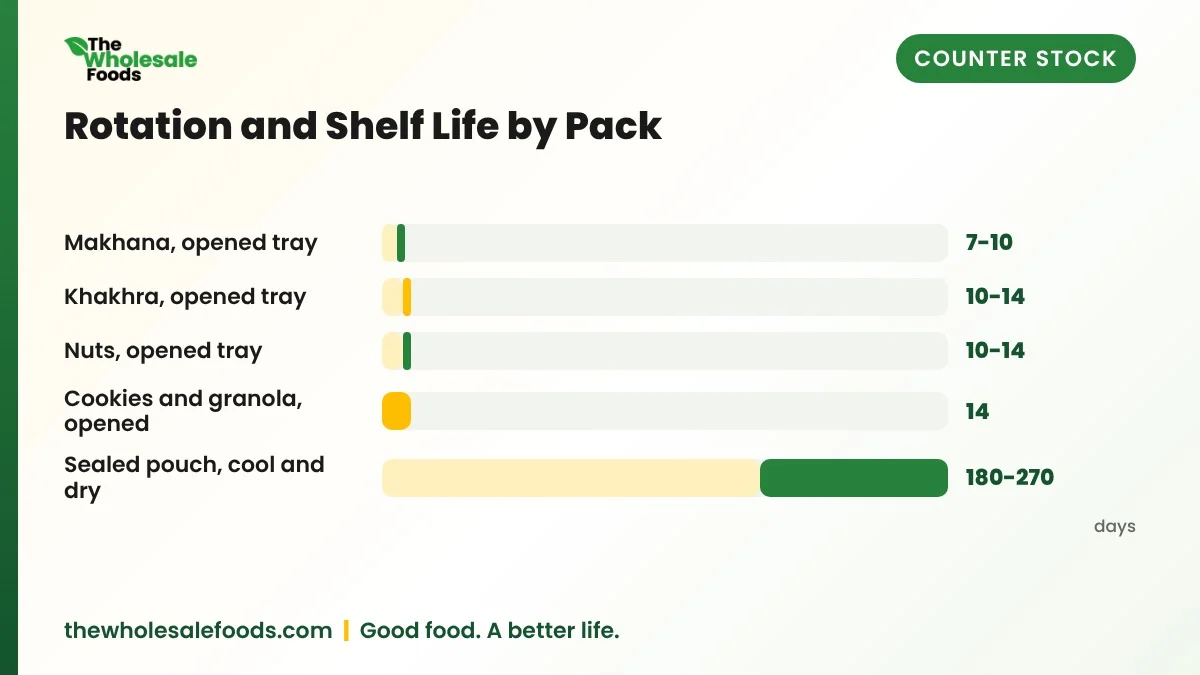
The sealed-pouch range is the reason wholesale packs work at all: you can hold stock for months if the pouch stays shut. The moment it is opened for a tray, the clock shortens to days. Write the opening date on masking tape and stick it inside the jar. Our Bulk pouch storage and shelf life guide covers the same rule for a full store room.
Build a Six-Step Opening Order
The first order decides whether the counter looks intentional or accidental. Do it in this order.
- Count your traffic. Note walk-ins between 11 am and 6 pm for one week, and how many of them buy something edible. That number sets everything below.
- Pick four anchor flavours. One salty puffed item, one crunchy flat item, one nut, one sweet. Nothing else in the first month.
- Order one carton per anchor. Wholesale packs of 10 pouches of 100 g each are the usual unit, which is a sensible starting quantity for a single counter.
- Set a two-week sell target. Aim to clear about 60% of a carton per anchor flavour in fourteen days; that is a safe pace for a new shelf.
- Add one flavour at a time. Bring in a fifth or sixth option only after two clean weeks, and drop the slowest mover when you do.
- Fix your reorder day. One fixed weekday for ordering keeps quantities steady and stops the Friday-evening panic call.
Anchor examples that work across most Indian counters: Salt and Black Pepper Makhana for the puffed slot, Masala Khakhra for the crunchy slot, Salted Almonds for the nut slot, and Coconut Cookies for the sweet slot.
Place the Shelf So It Sells Itself
Pouch placement adds or cuts a third of your movement without changing a single product. The logic is sightlines and hand height.
- Eye level for the margin flavour. Put the pouch with the best margin at adult eye height, roughly 140-160 cm, where the queue naturally looks.
- Hand height for the fast mover. Your highest-volume flavour belongs at 90-110 cm, because shoppers grab without bending or reaching.
- Front row for the newest arrival. A new flavour gets the front lip for two weeks so it gets a fair trial before you judge it.
- Away from heat and sun. Never place nuts or chocolate items on a shelf beside the espresso machine, grill or a west-facing window.
- One flavour, one facing. A single standing pouch per facing looks tidy; three crushed pouches stacked sideways looks like leftover stock.
- Decant only what you sell. Open trays look generous but shorten shelf life, so decant a day's quantity, not a week's.
If you also run a Wedding snack counter bulk setup on weekends, keep the event stock in a separate carton so weekday trays are not quietly emptied.
Enjoying this read? Get more like it.
Get fresh snack inspiration and updates from our team.
What to Check Before Buying in Bulk
This is the part most counters skip once, then never again. Work through it on every new supplier and every new carton.
- Read the ingredients. A short list you can pronounce sells better to health-minded walk-ins than a long one.
- Check the pack size. 100 g pouches suit single-serve resale; 200 g and larger packs suit families and trays.
- Confirm shelf life on the pack. Note the best-before and reject cartons with less than two-thirds remaining.
- Verify the seller's FSSAI licence details on the invoice and the pack, and keep a copy at the counter.
- Ask for a sample carton before a full order when adding a new flavour, and taste it yourself with your staff.
- Plan storage before it arrives. A cool, dry, dark shelf with room to breathe beats a cramped corner stacked to the ceiling.
- Agree the delivery terms in writing so a weekend rush does not depend on a verbal promise.
For a Jain clientele, only items marked Jain qualify, so check the product name rather than assuming. Peri-Peri Jain Makhana and Peri-Peri Jain Almonds are the ones to keep on that list.
Storage and Freshness at the Back of the House
Bulk only pays if the stock survives the back room. Keep sealed pouches in a cool, dry place away from the kitchen's heat and any direct window light, and never store pouches on the floor. Once opened, move the contents into an airtight jar the same day.
Makhana and khakhra lose their snap first in a humid week, so in monsoon keep opened trays shorter and reseal jars tighter. Nuts go soft and dull near any warm appliance. Cookies and granola stay well in sealed jars with a dry scoop. Rotate by best-before date, always, and mark the opening date on the jar rather than trusting memory. Keep a small written log of what you opened and what you discarded; three weeks of that log will tell you your real order quantity better than any guess.
Portioning and Serving Without Guesswork
You do not need a spreadsheet, but you do need three numbers written somewhere: what a carton costs you, what a pouch sells for, and how many pouches you clear in a week. Everything else follows from those.
A counter that rotates ten pouches a day sells more than one that displays forty.
Portioning matters at the serving end too. If you serve snacks in-house rather than selling pouches, a single-serve portion is about 28-30 g, so one 100 g pouch covers three servings and a 200 g pack covers six. For a fuller menu, our Canteen snack menu for 100 people works out quantities for a large crowd, and Chai time snacks covers the pairing that moves fastest at tea hour.
When a festive season lands, plan the counter a month ahead. Festive demand is short and steep, and a Corporate snack gift box checklist is the fastest way to turn leftover pouches into gift orders. Chocolate Granola and Oats Jaggery Cookies gift well in small boxes.
Common Counter Mistakes Worth Avoiding
- Ordering for the whole month. Two weeks of cover is enough for a new counter; monthly orders only make sense once a flavour has proven itself.
- Carrying twelve flavours on day one. Wide ranges look impressive and sell slowly, which is the worst combination for a small counter.
- Decanting everything. Open trays shorten shelf life sharply, so decant a day's worth and keep pouches sealed.
- Ignoring the slow mover. If a flavour has not cleared 60% of its carton in two weeks, it is not a slow week, it is the wrong flavour.
- Storing near the grill. Heat and humidity quietly ruin nuts and puffed snacks long before the best-before date.
Conclusion
A well-run snack counter is a rotation plan with pouches on it. Choose four anchor flavours, order in 100 g wholesale packs, set a clear-by date for every opened tray, and let two weeks of real sales tell you what to add. Do that and cafe snack counter bulk buying stops being a gamble on a carton and becomes a repeatable weekly routine.
Browse the Wholesale snack range and the Makhana collection, or send your counter's requirement through Quick Order or the Contact page for a bulk quote.
Disclaimer: This article is general food and nutrition information, not medical advice. People with health conditions or allergies should follow their doctor's advice.